The Imagination of Trees

Welcome to The Imagination of Trees.
This is my blog for 2010
Jess

Thursday, 15 May 2008

Poem 15 May 2008


Go on your way
Sail other seas
Swim the tide of freedom
Be loved for eternity
Drink peace and sobriety
Float on equal measures of solitude and company
Be with the God who answers prayer
The God who heard your plea
Took you home
Stroked the tears from your eyes
Be healed of cruelty
Washed free from malice
Be liberated to live eternally in the goodness of God
and loved ones living and dead
I feel you close in strange ways
Perhaps the sun that warms my back
Also warms yours

Thoughts about human kindnesses

When my Mum died, people said 'if there is anything you need, just tell us'. So I did. I asked them if they would weed our front garden. Sure enough on our return there were no weeds in sight. They loved it they said, it reminded them about teamwork, what fun it could be, why it mattered.
When we went away a man I know only from Church, a man of humility and kindness told my friend twice that she must tell me 'tell Jess I love her and I'm so sorry for what has happened and if they are having cheques instead of flowers she must tell me where I should send it because I want to give'. This man never met Mum, he has never had any significant time with me, I am not aware that he earns much money or has much spare.
His gesture and that of my friends who weeded my garden will never stop affecting me. The human capacity for kindness is bewildering, especially when you know their stories as I do.
I met another lady yesterday who had suffered indescribably through loss and injustice. She said she believed that we could become bitter or learn to be healing through our suffering. I think she is right. I have been taught so much by these people. The most important thing being that some people really want to give and we deny each other that opportunity too often. The other being that these voices are often the soft ones drowned out by those who seek to wound us.
I am resolved to listen more carefully for the soft voices of compassion among all the noise of the rest.

Poppies:

A Poem written as a reflection on Remembrance Day and for awareness raising for The Poppy Project working with women caught up in sexual exploitation. It takes the idea the 'we will remember them' should not only refer to the past.

Poppies

Fragile torn membranes
Vivid blood caught between the moving fields
Symbol; flower; drug and memory
Wreathed around graves, painted for mantles

Heavy-headed with broken necks
A murdered flower, fields of murdered flowers
Spiked stalks propping up faint-hearted beauty

Gritty, solid little seeds of hope
Gathered at the centre of tissue thin fabric
A little breeze will lift these tiny, gritty, stubborn nuggets
Fling them far and wide, float in the air, ride on the wind

Chase the deep flood of opiate
Float along the channels of addiction
Sit in dry, sunny warmth waiting for a buyer
A baker of bread
Seeded and sweet
Feeding the appetite of life which remains

Thoughts on Iona 2007


Thoughts on Iona

The Isle of Iona does not allow for pretence, it renders pretending futile. Our pretension amidst the honesty of the landscape, architecture and people becomes absurd.
The idea of ‘Truth’ has been endlessly discussed by philosophers in every age. [1] Truth in this reflection refers to the ‘Spirit of Truth’ in the Gospel attributed to John. She is the Holy Spirit, the Spirit of God that ‘blows where it will’.

This Spirit of Truth describes the essence and presence of Iona for me. Everything there is most appropriately understood within the spirit of truth, in the spirit in which it is meant.

There is a tangible, booming sense of truth on the island. Resounding clarity slaps us and we are left alarmed and reeling. Stunned into silence, or panicked into laughter. But there is no avoiding this clear, undiluted truthfulness; no arguing with it.

When we are drenched in this peculiar new reality we see clearly. Dishonesty reeks of self-conscious deceit. We feel betrayed by it and we betray ourselves with it. Suddenly pretence is revealed as destructive, pointlessly artificial. In this setting it is no longer purposeful. It is designed only to be revealed as a falsehood.

From time to time in every day life we are aware of a trickling drip of awareness trailing down our spines. Wrong time, wrong place, we just know it. A place like this solid sea-bound island is not always serene. It is possible to be in it and feel wrong about being there. It can appear to be the right place, but feel unaccountably like the wrong place. It can be an ideal time in every way, right month, right weather, but feel unavoidably like the wrong time. At times like this it is pretence to claim otherwise. The miracle is that God can turn it around. Being in the wrong place at the wrong time can become the right thing with God’s involvement. This is not the same as everything ‘being right’ or ‘meant to be’. It means that facing squarely those things that are instinctively ‘not right’, instead of denying them, gives God an opportunity to act. Denying our instincts about feeling wrong about something is not acting in the spirit of truth. Acknowledging the truth of our collective experiences, however exposing this may be allows that ‘sense of being in the wrong place’ to be acted upon. If we pretend that we feel ‘in the right place’ we deny God an opportunity to act upon that fact, we simply continue to feel that we are in the wrong place at the wrong time until we leave that situation.

On Iona this year I was overwhelmed by the conviction that I was in the wrong place at the wrong time. I left the island knowing the truth of this, but the deeper truth was that God had made it right. It didn’t ‘turn out to be right all along’, a situation honestly confronted was ‘made right’ and there is a distinct difference.

Our newly attuned ears, eyes and hearts, wide open with the stinging slap of Ionian beauty and exposure, ‘saw’ and ‘heard’ and ‘felt’. We saw, we heard and we felt the reality, and we saw, heard and felt the pretences. Many of the stories of our experiences, insights and revelations will remain between us and God. Many will be too complex to reveal or impossible to articulate. There will be an unspoken understanding which will have to be seen, heard and felt in many different ways, most of them alternatives to written or spoken language. But most of it will have been revealed by the Spirit of Truth.

The Spirit of Truth, as I understand it, exposes assumptions and expectations, sometimes it exposes their accuracy and at other times it reveals their falsity. Our assumptions can take us down many dangerous and unnecessary paths, as most of us know to our cost. Our expectations do likewise. My assumptions about the Iona Community and about our own Church Community were is some ways very inaccurate and this meant that my expectations became flawed. I know that some of my expectations of the Macleod Centre were equally awry and expectations followed that were equally unhelpful.

This was one of the first ‘truths’ that I learned on the island this year. Questioning and re-assessing my assumptions must become a habit. It would help communities if they collectively did the same. Assuming is part of our guess-work about life and it cannot be abandoned. It is just that assuming something does not automatically make it true. It must remain an assumption until clarity is sought and the assumption examined. Our assumptions bring with them our own visions of the world. They reflect our judgments and perceptions not only of how we think things are, but of how we think they should be. Our expectations flow out of our core assumptions.

[1] John Chapter 14 v 17

Reflection on Archbishop Rowan Williams following the furore over Shariah Law

Naïve Academic? Rowan Williams unafraid not unaware

Why are we so surprised at our Archbishop’s decision to exercise his right to freedom of speech? Why did he choose to make such a controversial speech so inexcusably public? Far from being unaware of the impact of a politically naïve decision, he has astutely manoeuvred Religious debate and Theological discussion onto the centre stage of Public Affairs. This is exactly where he believes it should be. We have repeatedly heard it said that Dr Rowan Williams is a Theologian and not a Politician. But there is a subtle distinction to be made. He is a Theologian choosing to place himself in a Political arena. This is a deliberate decision to place himself where he believes he should be. We should not underestimate our Archbishop. He is not unaware, but unafraid.

Religion is big news generally, even more surprisingly, Anglicans are big news, big and controversial news. But this week the Church of England and more specifically the Head of our Communion has created a media storm. By coincidence I was in the Inter Faith office at Lambeth Palace on the day that that storm erupted. Archbishop Rowan Williams is still on the home page of the BBC website. At the time of writing, his photograph and his already infamous lecture have been headline news for three days. Every paper from broadsheet to tabloid featured his gentle bearded face. His World at One interview on Radio Four, described as ‘ill-advised’ and as a ‘mistake’, is said to have been the naïve moment at which our leader and his advisors implemented their ‘high risk strategy’. Williams has never claimed to think of Christianity as devoid of risk, but he is not a man prone to strategy. He is embedded in deep contemplation about what it means to be a human being defined by our relationships to God and to one another. This in turn impacts upon public life and the legal system. For him being a Theologian is a high risk endeavour. I agree with him.

There continues to be consternation and incomprehension in every area of Public discourse. Why did he do it? Politicians are bemoaning his persistent straying onto their territory. This is exactly what he calls for. Political life is not the territory of politicians. It is a space we all occupy as human beings. Dr Williams resists the widely held popular view that there is no place for Theologians within it. He believes that public discussion about Religion, the last taboo, is vital to the establishment of peaceful, cohesive communities. His little-read specialist paper discussing the ‘unavoidable’ integration of some aspects of Islamic Law into the British Legal system has sparked outrage. The question on everybody’s lips is ‘why did he do it?’ Could he really have been unaware? If you read his books and papers you will see that Rowan Williams is not a man unaware of very much, unafraid perhaps. Some people are saying, and I agree with them, that ‘He must have known’. He is not unaware, he knows, but he is unafraid of the fact, that talking publicly about Religion makes him and his establishment very vulnerable indeed. Academics are complaining that his intensely intellectual and intelligent arguments should not be let loose for the General Public to misunderstand and abandon in favour of tabloid articles and three minute news shots. But Williams is complaining that we don’t understand the need for making Religion a public matter. In particular he is pursuing a distinctly Christian commitment to being publicly vulnerable and publicly thoughtful. This is a very unfashionable decision.

There is world-wide respect among Theologians for his scholarship. He is applauded for the consistency and relevance of his ideas. He is celebrated for his deep and broad comprehension of centuries of Christian tradition and of Biblical precepts. Even those who despise him and his convictions will never dare to underestimate his searing intelligence and academic rigour. Of relevance here is his very particular understanding of Christian ideas about what it means to be human. He pursues a comprehensive understanding of how people living in the Love of Christ have articulated their ideals concerning the idea of ‘personhood’. We might more readily refer to this as identity. We might be yet more familiar with the concept of the religious identity. He has studied in detail the ways in which contemporary people talk about who they are. This shouldn’t surprise us. This is what Theologians do. The age old questions: ‘Who am I?’; ‘Who am I in relation to God? ‘How does this define me?’; ‘What does this mean for my relationships?’; ‘What does the notion of who I am before God mean for us?’ These are the timeless debates which fascinate theologians. It was considered common knowledge among 20th Century philosophers and theologians that God would be Dead by now. Williams relentlessly pursues ideas about what it means to be a society for whom God is not ‘Dead’ at all.

I cannot accept the apparently convincing argument that he made the simple naïve mistake of an intellectual out of touch. I will never subscribe to the view that this man is naïve. He is a prolific writer. I have read about a dozen of his published books. Any reader of his theology will see that Dr Rowan Williams is a man of intention. His work is entirely in line with his actions. There is an authenticity in his actions this week which is reflected in his writings. He is a man who firmly believes in public dialogue around Religious ideas. He has never been ashamed to claim that Christianity has a historical precedent for involvement in the Political and Social life of any society. He finds it ridiculous that any human being should be defined by what any individual chooses. There is a powerful discourse at the moment that we are defined by our ‘lifestyle choices’. But he insists that we are not called to this as Religious men and women. He has confidence in the argument that our public declaration of our religious identity is a vital part of what it means for a religious person to live a good life. Who God says we are, not who the papers claim that we are is what makes us the people we are. Williams would not be afraid of the vulnerability he encounters as the target of Tabloid journalists or mass media coverage. He would see it as part of what it means to inhabit the space that God has given him to occupy.

To be unafraid and to be defined only by his relationship to God and to his neighbour is what our esteemed Archbishop stands by. His Religious identity is central to all of his ideas about his own humanity and the place he occupies within that humanity. Why would he consider a Muslim’s religious identity as less important to him or her and their place in their Religious community? Williams insists that Religious identities matter, our relationships to God define us and that we should be unafraid to say so publicly, as Jesus did. Many of his contemporaries present Religion as a ‘private matter’. He does not, has not and will not. We should not be ashamed of his being apparently unaware. We should emulate his capacity to be unafraid. Dr Rowan Williams positively asserts that the Christian vocation is to a Public declaration that for us Christ’s public vulnerability is our salvation.

Jess Boulton

Prayers for my Mother's funeral


Prayers of thanks:

Thank you for this woman
For her warm embrace, her smiling face.
She has scented our lives with a welcome fragrance
She has been treasured and precious.
Words will sketch our thanks only as a pencil drawing, and our silences and memories will add colour and shape.
We thank you differently, as we knew her differently
Our Mother
Sister
Grandmother
Wife
Aunt
Cousin
Our neighbour
friend
adopted mum
carer
Our listener
consoler
nurturer
fellow of the war-time
generation
patient.
She was woven into our lives, she shaped us with her presence
She shaped fruitful days with the clay of her life
Thank you for the nourishment she brought to life
Thank you for her joy in the smallest details
Clasped hands in sheer delight, her “Brilliant darling!”
Her brimming with pride
Thank you for her cherishing of human life,
her nurturing of fragile lives,
her quirky humour,
her wry smile,
her laughter
- THAT COOKING!
Thank you for her appetite, her Granny soup, her savouring of the palette of life
Thank you God of Life for her enthusiasm
For living every minute of every hour
Her generosity, hospitality, sheer warmth and vibrant energy
She was your gift to us and we had to give her back with reluctant goodbyes and tortured tearful embraces
Thank you for the gift of her life which we were so privileged to share.
We thank you and pray for those who, for whatever reason, can only be here in spirit.
Those who have died, especially June’s son-in-law Trevor,
those who are ill,
those who have to work,
those who are many miles away,
especially June’s sisters Barbara in Sweden and Jenny in Aberdeen.

Prayers of mourning:

We all had to let go
We urged her not to look back
We waded into the water, pushing her boat towards the light.
Unclasped her hands from ours and ours from hers
Wept our goodbyes, played her out, sang for her release, begged for an ending
Our prayers are answered, and she is at peace.
God of healing fade those scarring images of her traumatic ending
Force their savage cruel shapes into the shade of happier memories of wholeness and beauty
Unite us in our love for her
Hold us until the hurt is no longer heard so loudly and a new melody sings to us of her freedom.

Prayers of readiness:

This was a brave woman, defiant and courageous.
She was never afraid of your light, or of your love because she knew it so well already
Her life was shot through with the shining of your eternal love
Yours will be a familiar face, we have seen it in her own.
God of her life
Please take her home.

Wednesday, 14 May 2008

Good Friday Reflection: Julia's Story


The Centurion's Wife
“Julia! Julia!” a breathless voice, desperate with panic.

She pauses for a split second, gasps with relief, hands stained red from the blood she was washing from his tunic in the semi-darkness. There is water all over the floor from the earthquake, but there is washing to be done and so she carries on with her life. She must wash his uniform, he has been wounded in a battle, it is the blood of the man she loves, she must wash it away, cannot bear to think of his mortality.

“Julia, Julia!”; urgent now. She pats her daughter Marcia on the head and tells her to carry on washing her father’s uniform. She will be back in a minute.
“Marcus?” she cries out “we are all safe, all alive, the earthquake didn’t kill anyone here”, she runs to him, wraps her body around his familiar hard leather and metal breastplate. His centurion’s medals press hard into her breast and puncture her skin. “We are all safe! All safe! ”Marcus, don’t cry we are all safe, the light is returning”.

But the crying does not cease. He is racked with grief, hoarse with sobbing. “Truly, Julia, truly, he was the Son of God”, incoherent the words tumble from his mouth like water from a spring. He carries on spilling words into the faint light. “Into your hands I commend my spirit” this is what he said, “into your hands I commend my spirit”, Julia, “he was talking to the Jewish God”…”Jesus called his God ‘Father, I was facing him, we all were, me and the lads, when he breathed his last, he was righteous, he was innocent, he was the Son of God after all. We just watched him. We just watched him. Oh Julia what have we done?”

Julia stands and stares, ‘who is this?’ Where is her soldier? Why is he broken? What words are these of ‘hands and spirit’? She knows he is right; nothing has ever broken him before like these words have. It must be true, what he is saying can only be true; nothing breaks her Marcus, her man who she calls to mind in his absence by remembering the familiar smell of fresh human blood. It is his smell, it is his profession, it is to be expected that he would smell of human blood. Here he is, her Marcus crying with remorse simply because he was an onlooker in another man’s demise. Her heart beats in her ears a rhythm so fast she fears it will consume her. Her home is in chaos, cracked jars litter the floor, and this was no ordinary earthquake, the sun’s failure, everything shaken, broken and torn apart but no one dead and rendering her husband speechless with grief.

She is trembling with panic and she wonders what will happen next.

She finds her voice and can hardly bear what she must say. “Hands are for humans” she quivers, “hands are for humans”, they are for touching, they are for everything”. She goes on, gabbling with shock “The hands of the God’s are not like ours, they cannot reach us or touch us or receive from us”. “Marcus what are you saying?”. He could not “give” his breath into anyone’s hands; and not those of a God. It is not possible; it isn’t as if our ‘breath’, our ‘life’; our ‘spirit’ is bread, given into another’s hands. It is wind, it is air, it is only breath and when it stops it is simply death, the end. Death is an ending, it is where breath stops. There is nothing of it to give. How can anyone entrust the end of something?” “Marcus how could he give it, he couldn’t touch it, he has just given his death, what God could hold death in his hands like bread?” she shook now. “Marcus what does it mean?”

Marcus, slowly now, faltering, finding his tongue, parched with thirst from three hours gazing at an ordinary man revealing his divinity. This Jesus had shown his connection with his God, whilst all Jesus felt was agony.

Marcus had seen that Jesus was divine.

He finds his words sticking like coarse grain in his mouth; he can hardly get them out. “It means…”; deeply breathing now “it means…” gasping for survival… he shakes his head, bows it, heaves with sorrow, and pours out the truth like the first pouring of a new jar of wine. “It means I have stood facing a man who was the son of a God with hands like ours…and I have watched him die. That is what it means”

She stands motionless, the tears are coursing down her cheeks, moving into her neck, spreading over her chest and then her hands, in slow motion reach her face and she covers her face, palms of her hands sticky with blood. She is rocking now, the Centurion’s wife, holding her head, covering her face for shame. She stands there, time stops, everything stops, she hears nothing, feels nothing, cannot move or speak or touch or swallow, only the tears flow into her hands. Ages later she removes her hands. He looks up at his wife, his Julia, and takes in a sharp breath. Her hands have left the imprint of his blood. Hand shaped stains, his blood from his life’s work imprinted on her lovely face.

It is too much for him. He is violently sick. She stands and she continues to weep. They are both white with shock. Little Marcia moves silently and un-noticed into the room. She witnesses the scene, the two people who make sense of her life, white with horror, senseless with grief. She picks her way over the broken containers, the cups of wine spilt by the cosmos.

“Mater” she says to her Mother. “Mater, what has happened?”

Silence

Persistent now
“Mater”, “Mater”, “why are you crying?” “What has happened here?

Eternal moments pass, a motionless family caught in time and then slowly the truth crept from the silence of Julia’s mouth

“Our lives have changed forever”

Holy Week Tuesday 2007: A reflection

Holy Week Tuesday

I had been full of sprightly freshness, greening leaves and liquid sap, nourished and full, moving towards the sun and playing with the desert winds. Until that day I had lived a life of freedom and movement.
Until that day
On that day, they came, humanity, and they severed my tendons, carved brutally through the trunk of my existence, I stumbled, I fell. They came with what they later called the Banality of Evil tucked away in their minds, oblivious to the consequences of their savage destruction of this created thing. They had mundane jobs, but it was a living, one with the axe, another with the plane, one dug the hole, a careless way to destroy what I would later become.
I found myself upright once more on Crucifixion Day; I had been created at their hands, shaped to fit the back and the outstretched arms of an innocent. By now I was a desiccated, coarse lump of wood, my sap had drained away, I had been lying parched in the heat, immobilised, devoid of movement. It was good to be upright again; upright, useful, reaching for the sun. I waited, a simple wooden cross, made by people who were simply doing their job. The nails had been made, standard issue, fit for purpose and the hammer also, the skin on the soft palm of perfection driven through with the hot metal. The head crushed with thorns, a crown for a criminal.
The body when it came to me was already destroyed. The weight hung so freely that I swayed in the wind.
There was an atmosphere of impending disaster; the clouds hid the light, clustered together as though even they felt afraid of what inhumanity had done to this weak decrepit piece of human life. There was a sinister wind on That Day.
It took a long time for the life to drain away, even death it seemed, was reluctant this time, death hovered, as though afraid to carry out its task. I held the soft flesh, the angular bone in position, willing on death, sickened to the core of what I was unable to stop. I remember the words ‘forsaken’, the sense of a person cut off from God and disappointed by God. When death arrived, the crucified one did not meet it wordlessly but with words of completion. But the deepest voice which rang out across the hill on that day was one of relief and of triumph. This is what it said; ‘It is finished’, there was a small victory in this carcass, wilting in the hot blood human destruction.
Here I was holding a victor who seemed a pauper; keeping in my wooden arms the tangible presence of an ending which revelled in its finality.
Then, nothing, on to the next. They broke the body, pulled it down, a slab of meat, shredded skin, hanging intestine and then I was alone again.
It was an anticlimax; there had been hesitancy in the crowd, a reluctance to move away and two women who cried as though they had known this pathetic ending with equal intimacy.
Then, more nothing, and then I gave up, what was I waiting for anyway?
It took time, days in fact for me to recover my senses. I had known something which I could never explain. I had known the possibility of being a living tree once more; there was a power in the stillness of the condemned.
Time passed pointlessly and then suddenly it felt to me as though the whole earth had split in two. A tearing sound and a seam appeared pulling me in two straight down my centre. A chasm of hollow wood, I sensed this gaping, grieving gap opening further, split apart. I had been coated in blood, by now dried and flaking, now this wound opened within me, I was wrecked.
But this was the day on which everything changed forever, I sensed a strange calm and a movement within the chasm. I began to develop pale green leaves, they sprang from every corner of my wooden frame, soon I was coated in a vibrant green cloak of leaves. The moved in the breeze, shimmered in the sunlight, covered the deep wounds coated in blood. The blood remained in thick clots a constant memory of the pain, betrayal and agony of rejection, but another thing began. Cool, fresh water began to pour from my sides, forming fountains from the four corners of my structure, cleaning the scars, drenching me in liquid refreshment, soaking the cracked wood, the earth in which I stood, making me glisten, green and vibrant in the sun.

This was my resurrection, a day of freshness, newness and green vulnerable leaves growing tenderly from the deepest wounds of human life. There have been other resurrections since this day of days. There was the Palestinian who gave his dead son’s heart to a Jew, offering a new life which crossed the divide of religious resentment. There have been small kindnesses, which have melted the ice of bitterness; there have been days when in the deepest days of despair chasms of grief have become verdant valleys of hope. There have been days when people have accepted their scars as I did, lived with them in order to remember what they represent. There have been days when people everywhere have been made aware of an inner knowledge; the knowledge of the presence of God in all things and all places.

The power of this resurrection offers hope of an everlasting renewal and the knowledge which I sensed, with the hesitant approach of death, the intimacy of the women who followed Christ on That Day and waited with me. On such an incomparable day, there was something else, knowledge of something else, something endless & unseen. There was the constant sound of singing.
Freedom

I am thinking today about freedom. The nature of it, why we need it, why so many people don't have it.

Tuesday, 13 May 2008

this is my first attempt at blogging

Followers

New Year at Glasshampton Franciscan Friary

New Year at Glasshampton Franciscan Friary
Tapping the Ice

Iona

Iona

My original introduction

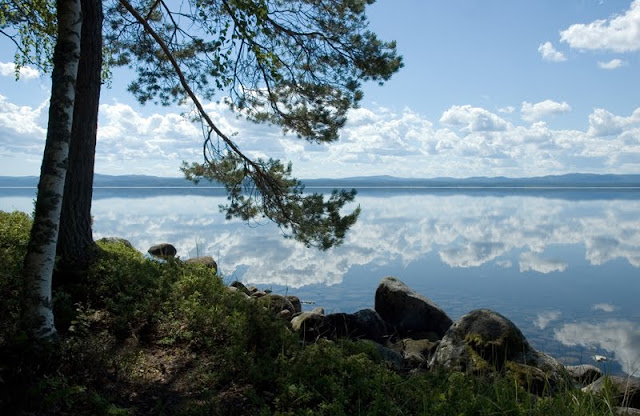
This photo was taken by my husband Graham on Iona. It is important here because it represents the way in which my Mum's death and funeral offered me healing. It marks a point at which I have decided, as she did, to be fully myself and live every moment given to me as fruitfully as I can. As part of this I wanted to start a 'new thing' and start allowing people to see more of my writing and therefore live my life more openly.
This blog is a response to the insights so many shared at Mum's funeral. I discovered there that my Mum was so much more than simply my Mum. She was never a saint, had many flaws, she could be frustrating and difficult like me. But I realise that these things were tiny when balanced next to her capacity for living and for giving. What emerged from her funeral was an image of a woman whose appetite for life and for quality of life was remarkable. She was entirely herself with everyone, whatever the cost. She gave all that she had to the people she loved, she fed us, nurtured us and showed us that every detail of every day was a blessing.
I am giving you my writing as part of the fruits of my life and person in honour of her memory and continued presence in my life. It is a risk I am now willing to take. She has given me the courage to live my life boldly.
When my Mum was dying I went to the Cathedral and imagined her saying goodbye at the side of an expanse of water. In my imagination there was a boat waiting for her to depart. In my mind I urged her to get in her boat, turn her back on us all, never look back and hope for the light on the other side of the water.
The boat story of Jesus telling terrified disciples not to be afraid in the storm and calming the waves has always been comfort to me in the storms of my life. There are so many ways of looking at the symbolic meaning of a boat.
For me this photo speaks to me about a song called 'Lord you have come to the lakeside' and in it there is a line. 'Now my boat's left on the shoreline behind me; by your side, I will seek other seas.' It is a line which kept coming to me as a friend of mine sat at her Aunt's bedside in her final hours. I sang it for her and her partner as they said their goodbyes as a prayer for them, because I knew how much they liked it. I think it began to speak to me too. When I urged my Mum to the other shore it seemed that her boat was only her own and no one could be in it with her. In her death I do feel called to 'seek other seas' as a new beginning with which to honour her departing.

Books I'm reading & books I've just read

  • The New Black; Mourning and Melancholia by Daniel Leader
  • The Time Travellers Wife
  • Retribution by Maureen Duffy
  • The Summer Book by Tove Janson
  • Voice Over by Celine Curiol
  • Perfume by Patrick Siskund
  • Loads of Alan Bennett's writings
  • Writing Home by Alan Bennett
  • A Short History of Tractors in Ukrainian
  • Salmon Fishing in The Yemen
  • Engelby, Sebastian Faulks
  • The Lolipop Shoes; Joanne Harris
  • The Prospect of Heaven: Musings of an Enquiring Believer, Frederick Levison
  • The Courage to Connect; Becoming all we Can Be, Rosemary Lain-Priestley

About my Writing

My writing tends towards the poetic, it has also been described as filmic. It is intensely personal and seeped in Christian imagery and thinking. I think it is spiritual writing in that it is rooted in the belief that there is a God and that God is very real to us in this time and place on earth. I write because it is something I am unable to live without. I write because it is healing and therapeutic. I write out of instinct and because I am by nature 'a writer'. I write for myself and for others that I know and love. I write for specific occasions and for purposes as well as for its own sake. Writing is a pleasure for me.
I write sporadicallly and as the mood takes me, it is not a disciplined exercise but something which emerges from my soul when it needs to be created. I have been astonished to find that people around me need my writing. They ask for what I have written and they ask for more. This blog is an attempt to meet that demand, not because I feel pressured to do so, but because God has given me a gift and it is begging to be used. People are asking me to us this gift fruitfully.
I think my writing is healing in its nature, it is soulful and intimate, it reaches places within us which we do not understand and it sometimes moves people to tears. It doesn't seem that writing like this is a productive or lucrative affair. It is not a 'niche market', it is not designed for profit or thought through in any sense. This approach would disable it.

Quote of the Week

Love me best when I deserve it least for it is then that I need it most

Beyond the Archipelago

Beyond the Archipelago
Foxtrot