Naïve Academic? Rowan Williams unafraid not unaware
Why are we so surprised at our Archbishop’s decision to exercise his right to freedom of speech? Why did he choose to make such a controversial speech so inexcusably public? Far from being unaware of the impact of a politically naïve decision, he has astutely manoeuvred Religious debate and Theological discussion onto the centre stage of Public Affairs. This is exactly where he believes it should be. We have repeatedly heard it said that Dr Rowan Williams is a Theologian and not a Politician. But there is a subtle distinction to be made. He is a Theologian choosing to place himself in a Political arena. This is a deliberate decision to place himself where he believes he should be. We should not underestimate our Archbishop. He is not unaware, but unafraid.
Religion is big news generally, even more surprisingly, Anglicans are big news, big and controversial news. But this week the Church of England and more specifically the Head of our Communion has created a media storm. By coincidence I was in the Inter Faith office at Lambeth Palace on the day that that storm erupted. Archbishop Rowan Williams is still on the home page of the BBC website. At the time of writing, his photograph and his already infamous lecture have been headline news for three days. Every paper from broadsheet to tabloid featured his gentle bearded face. His World at One interview on Radio Four, described as ‘ill-advised’ and as a ‘mistake’, is said to have been the naïve moment at which our leader and his advisors implemented their ‘high risk strategy’. Williams has never claimed to think of Christianity as devoid of risk, but he is not a man prone to strategy. He is embedded in deep contemplation about what it means to be a human being defined by our relationships to God and to one another. This in turn impacts upon public life and the legal system. For him being a Theologian is a high risk endeavour. I agree with him.
There continues to be consternation and incomprehension in every area of Public discourse. Why did he do it? Politicians are bemoaning his persistent straying onto their territory. This is exactly what he calls for. Political life is not the territory of politicians. It is a space we all occupy as human beings. Dr Williams resists the widely held popular view that there is no place for Theologians within it. He believes that public discussion about Religion, the last taboo, is vital to the establishment of peaceful, cohesive communities. His little-read specialist paper discussing the ‘unavoidable’ integration of some aspects of Islamic Law into the British Legal system has sparked outrage. The question on everybody’s lips is ‘why did he do it?’ Could he really have been unaware? If you read his books and papers you will see that Rowan Williams is not a man unaware of very much, unafraid perhaps. Some people are saying, and I agree with them, that ‘He must have known’. He is not unaware, he knows, but he is unafraid of the fact, that talking publicly about Religion makes him and his establishment very vulnerable indeed. Academics are complaining that his intensely intellectual and intelligent arguments should not be let loose for the General Public to misunderstand and abandon in favour of tabloid articles and three minute news shots. But Williams is complaining that we don’t understand the need for making Religion a public matter. In particular he is pursuing a distinctly Christian commitment to being publicly vulnerable and publicly thoughtful. This is a very unfashionable decision.
There is world-wide respect among Theologians for his scholarship. He is applauded for the consistency and relevance of his ideas. He is celebrated for his deep and broad comprehension of centuries of Christian tradition and of Biblical precepts. Even those who despise him and his convictions will never dare to underestimate his searing intelligence and academic rigour. Of relevance here is his very particular understanding of Christian ideas about what it means to be human. He pursues a comprehensive understanding of how people living in the Love of Christ have articulated their ideals concerning the idea of ‘personhood’. We might more readily refer to this as identity. We might be yet more familiar with the concept of the religious identity. He has studied in detail the ways in which contemporary people talk about who they are. This shouldn’t surprise us. This is what Theologians do. The age old questions: ‘Who am I?’; ‘Who am I in relation to God? ‘How does this define me?’; ‘What does this mean for my relationships?’; ‘What does the notion of who I am before God mean for us?’ These are the timeless debates which fascinate theologians. It was considered common knowledge among 20th Century philosophers and theologians that God would be Dead by now. Williams relentlessly pursues ideas about what it means to be a society for whom God is not ‘Dead’ at all.
I cannot accept the apparently convincing argument that he made the simple naïve mistake of an intellectual out of touch. I will never subscribe to the view that this man is naïve. He is a prolific writer. I have read about a dozen of his published books. Any reader of his theology will see that Dr Rowan Williams is a man of intention. His work is entirely in line with his actions. There is an authenticity in his actions this week which is reflected in his writings. He is a man who firmly believes in public dialogue around Religious ideas. He has never been ashamed to claim that Christianity has a historical precedent for involvement in the Political and Social life of any society. He finds it ridiculous that any human being should be defined by what any individual chooses. There is a powerful discourse at the moment that we are defined by our ‘lifestyle choices’. But he insists that we are not called to this as Religious men and women. He has confidence in the argument that our public declaration of our religious identity is a vital part of what it means for a religious person to live a good life. Who God says we are, not who the papers claim that we are is what makes us the people we are. Williams would not be afraid of the vulnerability he encounters as the target of Tabloid journalists or mass media coverage. He would see it as part of what it means to inhabit the space that God has given him to occupy.
To be unafraid and to be defined only by his relationship to God and to his neighbour is what our esteemed Archbishop stands by. His Religious identity is central to all of his ideas about his own humanity and the place he occupies within that humanity. Why would he consider a Muslim’s religious identity as less important to him or her and their place in their Religious community? Williams insists that Religious identities matter, our relationships to God define us and that we should be unafraid to say so publicly, as Jesus did. Many of his contemporaries present Religion as a ‘private matter’. He does not, has not and will not. We should not be ashamed of his being apparently unaware. We should emulate his capacity to be unafraid. Dr Rowan Williams positively asserts that the Christian vocation is to a Public declaration that for us Christ’s public vulnerability is our salvation.
Jess Boulton

Subscribe to:
Post Comments (Atom)
Followers
New Year at Glasshampton Franciscan Friary

Tapping the Ice
Iona

My original introduction
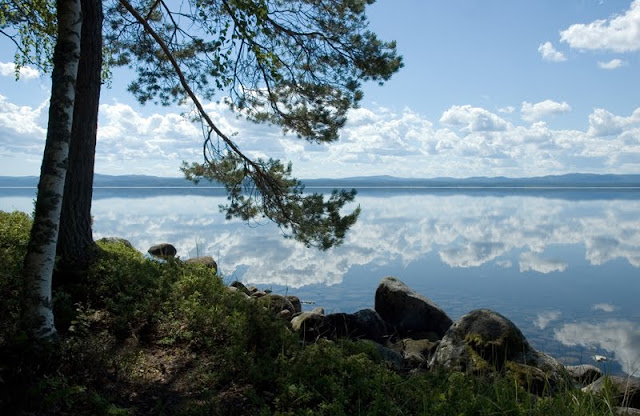
This photo was taken by my husband Graham on Iona. It is important here because it represents the way in which my Mum's death and funeral offered me healing. It marks a point at which I have decided, as she did, to be fully myself and live every moment given to me as fruitfully as I can. As part of this I wanted to start a 'new thing' and start allowing people to see more of my writing and therefore live my life more openly.
This blog is a response to the insights so many shared at Mum's funeral. I discovered there that my Mum was so much more than simply my Mum. She was never a saint, had many flaws, she could be frustrating and difficult like me. But I realise that these things were tiny when balanced next to her capacity for living and for giving. What emerged from her funeral was an image of a woman whose appetite for life and for quality of life was remarkable. She was entirely herself with everyone, whatever the cost. She gave all that she had to the people she loved, she fed us, nurtured us and showed us that every detail of every day was a blessing.
I am giving you my writing as part of the fruits of my life and person in honour of her memory and continued presence in my life. It is a risk I am now willing to take. She has given me the courage to live my life boldly.
When my Mum was dying I went to the Cathedral and imagined her saying goodbye at the side of an expanse of water. In my imagination there was a boat waiting for her to depart. In my mind I urged her to get in her boat, turn her back on us all, never look back and hope for the light on the other side of the water.
The boat story of Jesus telling terrified disciples not to be afraid in the storm and calming the waves has always been comfort to me in the storms of my life. There are so many ways of looking at the symbolic meaning of a boat.
For me this photo speaks to me about a song called 'Lord you have come to the lakeside' and in it there is a line. 'Now my boat's left on the shoreline behind me; by your side, I will seek other seas.' It is a line which kept coming to me as a friend of mine sat at her Aunt's bedside in her final hours. I sang it for her and her partner as they said their goodbyes as a prayer for them, because I knew how much they liked it. I think it began to speak to me too. When I urged my Mum to the other shore it seemed that her boat was only her own and no one could be in it with her. In her death I do feel called to 'seek other seas' as a new beginning with which to honour her departing.
This blog is a response to the insights so many shared at Mum's funeral. I discovered there that my Mum was so much more than simply my Mum. She was never a saint, had many flaws, she could be frustrating and difficult like me. But I realise that these things were tiny when balanced next to her capacity for living and for giving. What emerged from her funeral was an image of a woman whose appetite for life and for quality of life was remarkable. She was entirely herself with everyone, whatever the cost. She gave all that she had to the people she loved, she fed us, nurtured us and showed us that every detail of every day was a blessing.
I am giving you my writing as part of the fruits of my life and person in honour of her memory and continued presence in my life. It is a risk I am now willing to take. She has given me the courage to live my life boldly.
When my Mum was dying I went to the Cathedral and imagined her saying goodbye at the side of an expanse of water. In my imagination there was a boat waiting for her to depart. In my mind I urged her to get in her boat, turn her back on us all, never look back and hope for the light on the other side of the water.
The boat story of Jesus telling terrified disciples not to be afraid in the storm and calming the waves has always been comfort to me in the storms of my life. There are so many ways of looking at the symbolic meaning of a boat.
For me this photo speaks to me about a song called 'Lord you have come to the lakeside' and in it there is a line. 'Now my boat's left on the shoreline behind me; by your side, I will seek other seas.' It is a line which kept coming to me as a friend of mine sat at her Aunt's bedside in her final hours. I sang it for her and her partner as they said their goodbyes as a prayer for them, because I knew how much they liked it. I think it began to speak to me too. When I urged my Mum to the other shore it seemed that her boat was only her own and no one could be in it with her. In her death I do feel called to 'seek other seas' as a new beginning with which to honour her departing.
Books I'm reading & books I've just read
- The New Black; Mourning and Melancholia by Daniel Leader
- The Time Travellers Wife
- Retribution by Maureen Duffy
- The Summer Book by Tove Janson
- Voice Over by Celine Curiol
- Perfume by Patrick Siskund
- Loads of Alan Bennett's writings
- Writing Home by Alan Bennett
- A Short History of Tractors in Ukrainian
- Salmon Fishing in The Yemen
- Engelby, Sebastian Faulks
- The Lolipop Shoes; Joanne Harris
- The Prospect of Heaven: Musings of an Enquiring Believer, Frederick Levison
- The Courage to Connect; Becoming all we Can Be, Rosemary Lain-Priestley
Favourite Links
About my Writing
My writing tends towards the poetic, it has also been described as filmic. It is intensely personal and seeped in Christian imagery and thinking. I think it is spiritual writing in that it is rooted in the belief that there is a God and that God is very real to us in this time and place on earth. I write because it is something I am unable to live without. I write because it is healing and therapeutic. I write out of instinct and because I am by nature 'a writer'. I write for myself and for others that I know and love. I write for specific occasions and for purposes as well as for its own sake. Writing is a pleasure for me.
I write sporadicallly and as the mood takes me, it is not a disciplined exercise but something which emerges from my soul when it needs to be created. I have been astonished to find that people around me need my writing. They ask for what I have written and they ask for more. This blog is an attempt to meet that demand, not because I feel pressured to do so, but because God has given me a gift and it is begging to be used. People are asking me to us this gift fruitfully.
I think my writing is healing in its nature, it is soulful and intimate, it reaches places within us which we do not understand and it sometimes moves people to tears. It doesn't seem that writing like this is a productive or lucrative affair. It is not a 'niche market', it is not designed for profit or thought through in any sense. This approach would disable it.
I write sporadicallly and as the mood takes me, it is not a disciplined exercise but something which emerges from my soul when it needs to be created. I have been astonished to find that people around me need my writing. They ask for what I have written and they ask for more. This blog is an attempt to meet that demand, not because I feel pressured to do so, but because God has given me a gift and it is begging to be used. People are asking me to us this gift fruitfully.
I think my writing is healing in its nature, it is soulful and intimate, it reaches places within us which we do not understand and it sometimes moves people to tears. It doesn't seem that writing like this is a productive or lucrative affair. It is not a 'niche market', it is not designed for profit or thought through in any sense. This approach would disable it.

 Posts
Posts


Quote of the Week
Love me best when I deserve it least for it is then that I need it most
Beyond the Archipelago

Foxtrot
Blog Archive
-
►
2011
(1)
- ► 2 Jan - 9 Jan (1)
-
►
2010
(16)
- ► 24 Oct - 31 Oct (3)
- ► 29 Aug - 5 Sept (1)
- ► 22 Aug - 29 Aug (5)
- ► 7 Mar - 14 Mar (1)
- ► 24 Jan - 31 Jan (3)
- ► 10 Jan - 17 Jan (1)
- ► 3 Jan - 10 Jan (2)
-
►
2009
(31)
- ► 27 Dec - 3 Jan (1)
- ► 22 Nov - 29 Nov (1)
- ► 24 May - 31 May (1)
- ► 10 May - 17 May (1)
- ► 12 Apr - 19 Apr (1)
- ► 1 Mar - 8 Mar (1)
- ► 22 Feb - 1 Mar (2)
- ► 15 Feb - 22 Feb (3)
- ► 8 Feb - 15 Feb (3)
- ► 1 Feb - 8 Feb (1)
- ► 18 Jan - 25 Jan (1)
- ► 11 Jan - 18 Jan (2)
- ► 4 Jan - 11 Jan (13)
-
▼
2008
(66)
- ► 7 Dec - 14 Dec (2)
- ► 19 Oct - 26 Oct (2)
- ► 12 Oct - 19 Oct (5)
- ► 5 Oct - 12 Oct (14)
- ► 28 Sept - 5 Oct (1)
- ► 21 Sept - 28 Sept (2)
- ► 7 Sept - 14 Sept (3)
- ► 31 Aug - 7 Sept (3)
- ► 24 Aug - 31 Aug (3)
- ► 17 Aug - 24 Aug (9)
- ► 27 Jul - 3 Aug (1)
- ► 13 Jul - 20 Jul (6)
- ► 22 Jun - 29 Jun (1)
- ► 15 Jun - 22 Jun (2)
- ► 25 May - 1 Jun (1)
- ► 18 May - 25 May (1)
- ▼ 11 May - 18 May (10)

No comments:
Post a Comment