Last night in our group we talked about 'forgiveness'. We based our conversation around Matthew 18. I found it really hard. Because I am reading about self-harm and all that it entails and when I think of my own story and the story of others I begin to worry that my own wholehearted approach to forgiveness could be seen as immoral. I sometimes think that my behaviour is immoral.
We talked very openly and very diversely about the centrality of forgiveness to the Christian Faith. We talked about how we marry these ideas to real life situations.
We all have known unforgivable things. All of us had slightly different take on the practical application of the commandment to forgive to our own situations, the people involved and those of others. One person, whom I shall call Penelope had a wonderful, moving story which made the hairs stand up on the back of my neck. She had a Godfather, a Jewish man who embraced Christianity. He had been in Dakau Concentration Camp until the end of the war. I don't remember at what point he was imprisoned there. I think it was towards the beginning because I think he remained there for three, possibly four years. At the end of the war he was handed a gun with which to shoot his persecutors. He handed back the gun. He had told his God-daughter that revenge and unforgiveness is the beginning of hate. He didn't want his tormentors who were full of hatred to turn him to hatred. His forgiveness of them was a way of preventing the hatred from perpetuating. Penelope therefore grew up with a passionate commitment to forgiveness and reconciliation. She had even worked in Germany with various people who during wartime did terrible things to others and had terrible things done to them. She sees no way out of a commitment to forgiveness for any Christian. For her the distinguishing feature of a Christian is his or her determination to be open to forgiveness in any given situation. She extended this to being open to forgive those who are not repentant and indeed even forgiving them in our hearts regardless of their awareness or contrition. We all have a central tenet around which all aspects of our religion move. This is her immovable point. Forgiveness. She says none of the other religions have this concept as a central commandment. For me, this is what makes us complicated, I am ashamed of our decision to forgive unforgivable things, she declares it as the single thing that keeps her publicly proclaiming herself as a Christian.
This was a helpful revelation. What one woman can see as a shameful theology, another can prize as her salvation. She had an abusive Mother with psychiatric issues, mental health problems triggered by wartime circumstances. Penelope forgave and continues to forgive because she sees this as a consequence of her Mother's experience of life. She employs the 'to understand is to forgive' motto.
I did this for years, I had the same conviction for years. My family has been described by my sister-in-law as 'the most forgiving family' she ever knew. What she loves about my family, who are actually also her family, is that infinite capacity to forgive unforgivable behaviour. I think it is our downfall. The interpretation of the commandment to forgive in our family is that 'everything and anything will be alright.' It has been applied to eradicate rules of conduct. When everything is forgiven then nothing really matters and consequences are not considered.
We have an elderly man in our group, I'll call him Frank, who keeps us on our toes. He thinks it is all baloney, Christianity full stop is just total nonsense. The aspect of Christianity he most despises is the emphasis on forgiveness. He thinks it is immoral to forgive unspeakable acts. 'Why', he argues, 'should they get away with it'?
Our Priest, lets call him Bob, had some fascinating arguments. Forgiveness in the Jesus stories of Matthew is concerned with relationship, with the Church community, with unity and accountability. It is a corporate and not an individual matter. It is also concerned with justice and witness. Forgiveness is contextual. Forgiveness also includes an attitude of the heart, and a readiness to forgive should repentance ever be apparent. Not only this but he argued that we depend upon the grace of God to give us the capacity to forgive. In God's time, God will make it possible for us to forgive. It is not a quick fix and can be a lifetime commitment to be open to forgiveness and the possibility of it. He also argued, with Penelope, that we cannot forgive on behalf of another person or community. Their resentment, pain or experience is theirs alone or together and we cannot make that decision for them.
Bob has thought through the possiblity of going to the Palestinian border when he retires (although he hasn't talked it through with his wife!). There is a group of retired priests (mostly men I would imagine, since women have only been ordained for just over a decade...but we forgive them of course!) who stand between Israel and Palestine, taking no side simply being there as a witness. This is a unique opportunity for the Christian Church because of our theology of forgiveness in place of revenge. This presence leaves an openness to reconciliation an example of the choice which can be made.
A woman we shall call Pru, a good friend of mine, who knows many of our stories, spoke of the propensity of society to see those who forgive as easy targets. She spoke of the vulnerability involved in that decision. How easy it has been for us to become doormats. This led us to a view from another friend that the converse was true. We agreed that although this might be the case, we are still viewed as 'weak', as Jesus was when he refused to fight back and argued that those who killed him 'did not know what they were doing'. A lengthy discussion ensued as to the legitimacy of forgiveness when the person concerned does not understand that they have committed an act of cruelty. How do we forgive those who are not sorry, or are not aware? We were brought back to our attitude of mind and to prayer, to commitment to the potential of the human to forgive. Penelope even equated her humanity with her capacity and willingness to forgive. Inhumanity stems from the unforgiveness of communities who have never let go of old resentments. Inability or unwillingness to forgive led to war, she said. There was no justification in pullng people from current day into previous conflict. Controversially, given recent discourse around the Holocaust and the need for apology from people who were not there, she argued that we cannot legitimately apologise for something we did not do or forgive what we did not experience.
For me the prevailing question is what to do when a culture of abuse is living with abuses from the past which are dictating our behaviour in the present, and threatening through the continual forgiving of unrepentant abusers, to continue in the future? If I forgive the abusers, what becomes of the abused? Bob helped with Penelope by arguing that forgiveness can be important in our healing, in 'letting-go'. Here the healing of new relationship can take place. Any forgiveness is not an act of an individual in isolation but both a confrontation of an offence, an acknowledgement of that offence and a decision and willingness to start again. It is about new beginnings. The person forgiven must agree not to commit the same offence again, must acknowledge their own wrong and be willing to find new ways of being in relationship in the future. If this cannot happen then the relationship must be left in the past but we must continue to pray for our offender.
Our own relationship to our own personal behaviour was then examined. If we have 'sinned against another', which we inevitably have, we are called first to remorse, second to repentance and thirdly to new relationship and reconciliation. This is the pattern of the Christian life and is linked to the Crucifixion. Our own sin is forgiven and this sets us free from the life bound by the cruelty of our common humanity into a life which acknowledges human cruelty but tries not to participate in it.
I saw this as my own identification with the abuses and cruelties of others. We had a corporate responsibility to forgive, because we sin corporately too. Christian Theology will argue that we are set free by Christ's death from that pattern of revenge and hatred which binds us to war. Forgiveness as demonstrated on the cross is an unarguable part of this. I need to find ways in which I cherish and am grateful for Christ's action in my life which has given me a different way. I cannot judge people who have not been given another way. We concluded with the well-known idiom 'there, but for the grace of God, go I'

Subscribe to:
Post Comments (Atom)
Followers
New Year at Glasshampton Franciscan Friary

Tapping the Ice
Iona

My original introduction
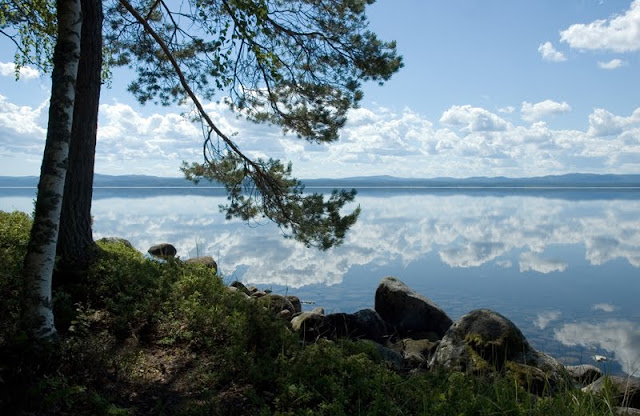
This photo was taken by my husband Graham on Iona. It is important here because it represents the way in which my Mum's death and funeral offered me healing. It marks a point at which I have decided, as she did, to be fully myself and live every moment given to me as fruitfully as I can. As part of this I wanted to start a 'new thing' and start allowing people to see more of my writing and therefore live my life more openly.
This blog is a response to the insights so many shared at Mum's funeral. I discovered there that my Mum was so much more than simply my Mum. She was never a saint, had many flaws, she could be frustrating and difficult like me. But I realise that these things were tiny when balanced next to her capacity for living and for giving. What emerged from her funeral was an image of a woman whose appetite for life and for quality of life was remarkable. She was entirely herself with everyone, whatever the cost. She gave all that she had to the people she loved, she fed us, nurtured us and showed us that every detail of every day was a blessing.
I am giving you my writing as part of the fruits of my life and person in honour of her memory and continued presence in my life. It is a risk I am now willing to take. She has given me the courage to live my life boldly.
When my Mum was dying I went to the Cathedral and imagined her saying goodbye at the side of an expanse of water. In my imagination there was a boat waiting for her to depart. In my mind I urged her to get in her boat, turn her back on us all, never look back and hope for the light on the other side of the water.
The boat story of Jesus telling terrified disciples not to be afraid in the storm and calming the waves has always been comfort to me in the storms of my life. There are so many ways of looking at the symbolic meaning of a boat.
For me this photo speaks to me about a song called 'Lord you have come to the lakeside' and in it there is a line. 'Now my boat's left on the shoreline behind me; by your side, I will seek other seas.' It is a line which kept coming to me as a friend of mine sat at her Aunt's bedside in her final hours. I sang it for her and her partner as they said their goodbyes as a prayer for them, because I knew how much they liked it. I think it began to speak to me too. When I urged my Mum to the other shore it seemed that her boat was only her own and no one could be in it with her. In her death I do feel called to 'seek other seas' as a new beginning with which to honour her departing.
This blog is a response to the insights so many shared at Mum's funeral. I discovered there that my Mum was so much more than simply my Mum. She was never a saint, had many flaws, she could be frustrating and difficult like me. But I realise that these things were tiny when balanced next to her capacity for living and for giving. What emerged from her funeral was an image of a woman whose appetite for life and for quality of life was remarkable. She was entirely herself with everyone, whatever the cost. She gave all that she had to the people she loved, she fed us, nurtured us and showed us that every detail of every day was a blessing.
I am giving you my writing as part of the fruits of my life and person in honour of her memory and continued presence in my life. It is a risk I am now willing to take. She has given me the courage to live my life boldly.
When my Mum was dying I went to the Cathedral and imagined her saying goodbye at the side of an expanse of water. In my imagination there was a boat waiting for her to depart. In my mind I urged her to get in her boat, turn her back on us all, never look back and hope for the light on the other side of the water.
The boat story of Jesus telling terrified disciples not to be afraid in the storm and calming the waves has always been comfort to me in the storms of my life. There are so many ways of looking at the symbolic meaning of a boat.
For me this photo speaks to me about a song called 'Lord you have come to the lakeside' and in it there is a line. 'Now my boat's left on the shoreline behind me; by your side, I will seek other seas.' It is a line which kept coming to me as a friend of mine sat at her Aunt's bedside in her final hours. I sang it for her and her partner as they said their goodbyes as a prayer for them, because I knew how much they liked it. I think it began to speak to me too. When I urged my Mum to the other shore it seemed that her boat was only her own and no one could be in it with her. In her death I do feel called to 'seek other seas' as a new beginning with which to honour her departing.
Books I'm reading & books I've just read
- The New Black; Mourning and Melancholia by Daniel Leader
- The Time Travellers Wife
- Retribution by Maureen Duffy
- The Summer Book by Tove Janson
- Voice Over by Celine Curiol
- Perfume by Patrick Siskund
- Loads of Alan Bennett's writings
- Writing Home by Alan Bennett
- A Short History of Tractors in Ukrainian
- Salmon Fishing in The Yemen
- Engelby, Sebastian Faulks
- The Lolipop Shoes; Joanne Harris
- The Prospect of Heaven: Musings of an Enquiring Believer, Frederick Levison
- The Courage to Connect; Becoming all we Can Be, Rosemary Lain-Priestley
Favourite Links
About my Writing
My writing tends towards the poetic, it has also been described as filmic. It is intensely personal and seeped in Christian imagery and thinking. I think it is spiritual writing in that it is rooted in the belief that there is a God and that God is very real to us in this time and place on earth. I write because it is something I am unable to live without. I write because it is healing and therapeutic. I write out of instinct and because I am by nature 'a writer'. I write for myself and for others that I know and love. I write for specific occasions and for purposes as well as for its own sake. Writing is a pleasure for me.
I write sporadicallly and as the mood takes me, it is not a disciplined exercise but something which emerges from my soul when it needs to be created. I have been astonished to find that people around me need my writing. They ask for what I have written and they ask for more. This blog is an attempt to meet that demand, not because I feel pressured to do so, but because God has given me a gift and it is begging to be used. People are asking me to us this gift fruitfully.
I think my writing is healing in its nature, it is soulful and intimate, it reaches places within us which we do not understand and it sometimes moves people to tears. It doesn't seem that writing like this is a productive or lucrative affair. It is not a 'niche market', it is not designed for profit or thought through in any sense. This approach would disable it.
I write sporadicallly and as the mood takes me, it is not a disciplined exercise but something which emerges from my soul when it needs to be created. I have been astonished to find that people around me need my writing. They ask for what I have written and they ask for more. This blog is an attempt to meet that demand, not because I feel pressured to do so, but because God has given me a gift and it is begging to be used. People are asking me to us this gift fruitfully.
I think my writing is healing in its nature, it is soulful and intimate, it reaches places within us which we do not understand and it sometimes moves people to tears. It doesn't seem that writing like this is a productive or lucrative affair. It is not a 'niche market', it is not designed for profit or thought through in any sense. This approach would disable it.

 Posts
Posts


Quote of the Week
Love me best when I deserve it least for it is then that I need it most
Beyond the Archipelago

Foxtrot
Blog Archive
-
►
2011
(1)
- ► 2 Jan - 9 Jan (1)
-
►
2010
(16)
- ► 24 Oct - 31 Oct (3)
- ► 29 Aug - 5 Sept (1)
- ► 22 Aug - 29 Aug (5)
- ► 7 Mar - 14 Mar (1)
- ► 24 Jan - 31 Jan (3)
- ► 10 Jan - 17 Jan (1)
- ► 3 Jan - 10 Jan (2)
-
►
2009
(31)
- ► 27 Dec - 3 Jan (1)
- ► 22 Nov - 29 Nov (1)
- ► 24 May - 31 May (1)
- ► 10 May - 17 May (1)
- ► 12 Apr - 19 Apr (1)
- ► 1 Mar - 8 Mar (1)
- ► 22 Feb - 1 Mar (2)
- ► 15 Feb - 22 Feb (3)
- ► 8 Feb - 15 Feb (3)
- ► 1 Feb - 8 Feb (1)
- ► 18 Jan - 25 Jan (1)
- ► 11 Jan - 18 Jan (2)
- ► 4 Jan - 11 Jan (13)
-
▼
2008
(66)
- ► 7 Dec - 14 Dec (2)
- ► 19 Oct - 26 Oct (2)
- ► 12 Oct - 19 Oct (5)
- ► 5 Oct - 12 Oct (14)
- ► 28 Sept - 5 Oct (1)
- ► 21 Sept - 28 Sept (2)
- ► 31 Aug - 7 Sept (3)
- ► 24 Aug - 31 Aug (3)
- ► 17 Aug - 24 Aug (9)
- ► 27 Jul - 3 Aug (1)
- ► 13 Jul - 20 Jul (6)
- ► 22 Jun - 29 Jun (1)
- ► 15 Jun - 22 Jun (2)
- ► 25 May - 1 Jun (1)
- ► 18 May - 25 May (1)
- ► 11 May - 18 May (10)

No comments:
Post a Comment