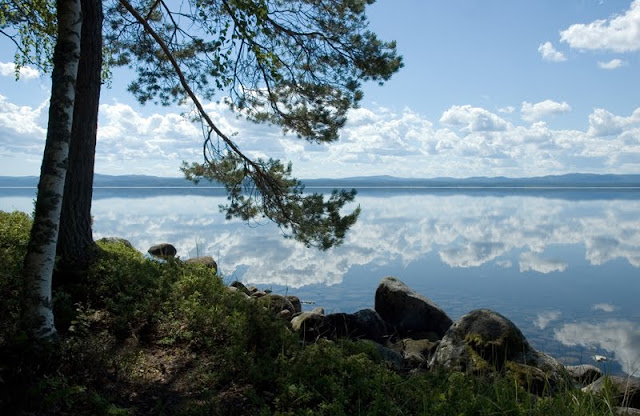
In England many of us Religous types have been watching a series called 'Around the World in 80 Faiths'. In said programme a particularly eccentric Church of England Priest is literally travelling the world in a floppy hat experiencing 80 different faiths. If I'm honest, I feel jealous. Anglicans in particular are not renowned for our capacity for having fun. Even when we are trying to be 'lively' it takes a superlative effort and has a forced air about it. Anglicans in English society are stereotyped as seriously humourless. While the Hindus in India are having dung fights and dousing each other with Vermillion paint and the Sufis are whirling... we aren't.
The most exciting it gets is our wild use of a limited pallette of liturgical colour. Every now and then we go crazy and swap purple altar cloths for Scarlet. Recently I have become very enamoured of sitting in silence. But it has its limitations. Yesterday three of us met for our half hour of Silent Prayer. This is really a form of meditation. It is like a Quaker meeting. We sit in a semi-circle in silence around a candle. This form of prayer can become desperately serious. In fact a great deal of religious activity can become a very serious matter. This is generally thought to be a good thing. We want to take what we do seriously. The danger comes when we start to take ourselves too seriously.
Which is why yesterday afternoon and the day before that was so good for us all. In Churches there is great focus on prayer and silence and listening intently to each other, God and ourselves. There is earnest commitment to transformation and growth. We are always striving to do things more effectively and to improve what we do so that it is more helpful. There is relentless work to be something a skeptical population can take seriously. It can make for sombre weeks. We have many meetings with intense discussion. We are always looking out for people and, as you know, dealing with traumatic realities. But yesterday and the day before we simply laughed and laughed and laughed. It was such a relief.
For me there is a tendency to take life and myself too seriously anyway. This tendency is exacerbated by being a religious person. It is intensified further by spending so much time with religious people in religious settings. But I have always loved a laugh too and was very prone to giggling as a child. Children understand about laughter. They know it is necessary. They are right. When we were children we knew how to laugh out loud for hours on end about absolutely nothing.
On one occasion of hilarity I was sitting in a circle trying to take myself seriously, and pulling my face into a pious, earnest demeanour. On the other I gave up trying.
On the first occasion I was in a setting with people I didn't know, being watched from a distance by friends who knew I was trying to keep a straight face. On the second I was with two friends who are both very funny, our Silent Prayer meeting ended up being a 'Laughter meeting'. My friend suggested that we advertise future conventions in the Newsletter as 4.00pm Silent Laughter, 5.00pm Raucous laughter and 6.00pm Hysterical Laughter.
On the first occasion my friends had abandoned me to my fate. I was sat with many earnest characters perpetually singing one line chants and interspersing them with tightly choreographed silences. There is a limit to how much time we can spend singing 'The Lord is My Light' whilst sitting in the dark. I couldn't meet the eyes of my mischievous friends and so I was pretending to pray fervently about important matters. What I was actually doing was fervently praying that the laughter wouldn't spill out in a torrent. Eventually it did after a torturous Forty-Five minutes. I had to walk away in a calm and ordered manner through the cavernous space, seeking a private place where I could release the illicit humour. I tried to be meditative as I fled and not click my heels on the tiles. I walked into the little room at the back and silently laughed and laughed until my sides hurt and I started to make little snorting and squeaking noises. I hid with a friend and was unable to speak. There had been something about the piety of those around me. All those eyes closed with beatific smiles and eyebrows slightly raised. There is an unwritten law that when we religious people pray together we place our hands on our laps facing upwards and together in an attitude of 'recieving'. I have always resisted the urge but it is contagious and I caught this disease. I find that I sit raising my own eyebrows expectantly, my own face smiling beatifically, with my hands placed accurately on my lap. It is a matter of time before I am wearing a knitted , striped hand-knitted jumper with motifs all over it and a strange fish-shaped necklace. This I have so far resisted but I know I am far from immune. By Summer I am likely to be wearing open toed, sensible, velcro-fixed, practical sandals and ear-rings in the shape of crucifixes. As the Piety Syndrome becomes more advanced I will be using words like 'challenge' and 'radical'. There is no medication for this disease. It is inevitable. What concerns me is that the disease at its most severe actually robs us of our sense of humour. People forget that God gave us laughter. God didn't ever give us a commandment that said 'thou shalt sit in circles wearing odd clothes with not even a twitch of humour in your soul'. Unfortunately we seem to have made this 'no amusement commandment' up. It is inscribed in Pious Law along with all the other odd conventions which have crept in: wearing beards and sandals among them. There is a new tradition of wearing odd plastic bangles with coded inscriptions like WWJD embossed into the wristband as though we live in such persecution in England that morse code is the only way. I assure you that my time spent in a room of twenty such characters all sitting mute with hands in a scooping motion waiting to catch the Lord's grace recovered my sense of humour. As I surreptitiously looked up during an accurately timed 'Long Silence' I caught twenty pairs of eyelids closed lightly in adoring contemplation, fish-necklaces twinkling above the neckline of a hand-knit jumper and I lost it completely.
I made the fatal decision of checking that it wasn't just me. I glanced sideways at my friend who has the odd defect of being a religious person possessing an outrageous sense of humour. Mistake. Big mistake. My stomach started involuntarily jumping and I started making tiny coughing noises, air escaping accidentally from my nostrils. It was unbearable. The more amused I became the severe they all looked. The more laughter that came the more disapproving they all felt. I didn't know what to do about it. But the situation was about to worsen. Two other friends, not infected with religiosity had decided to observe my humiliation from a distance. These grown adults, regressing with the classroom atmosphere had hidden behind some pews in the children's area. I couldn't see them committing their crimes. But I could hear them. They started to titter. At my most desparate they became unable to contain themselves. The tittering became muffled squawking. They began to sound convincingly hysterical. Mr Hand-knit to my right obviously fancied himself as Priestly Male and took on the responsibility of managing what increasingly sounded like two people having nervous breakdowns. He took a break from showing off his middle-class Latin, while the rest of us continued to sing in English and loped into the darkness in search of his opportunity to display his pastoral expertise. I was too helpless to concentrate on this activity at the back of the Church. I couldn't save them from him. He returned looking bewildered after some time using his Vicar voice. I was to find out later that he had found two adult women lying on their backs on the carpet doing 'Meercat impressions'. Evidently they had originally been 'playing meercats' by peering secretly over the pews and bouncing up and down. Unfortunately he found them embarrasingly lying down, losing the plot in full character as Mr and Mrs Meercat. "Are you alright?", he asked, in what was possibly the most unneccessary sentence uttered. My wonderfully honest, un-infected friend still resisting Piety Disorder was frank with Mr Handknit. She replied honestly to his unsubtle request for her to shut up which had been neatly disguised as deep concern. She wasn't sure, she said. 'Not really' she said. 'I'm not sure whether I'm hysterical or not' (she'd had a bad day). The fact of her meercat impression in the children's area probably could have answered his question. Mr Handknit faced with two hysterical Meercats was, surprisingly, inclined to return to his Latin, apparently less concerned for her welfare than he had initially declared. The Vicar voice is clearly not adequate for dealing with hysterical women. He absented himself and at this point a secret sqeal emerged from the gloom. I thought it was going to kill me and the heaving in my stomach muscles began again, little spasms that I couldn't contain and I was convinced the little group of good people were going to think I was having a 'Harry met Sally moment'. But it was never going to be an orgasm in an atmosphere like that. The worst of it was that laughter was much more outrageous than sexual ecstasy in a Holy Place. At least Latin-speaking Vicars could refer me for medical treatment for being too fleshly. At least he could have quoted Theresa of Avila and the sculpture of her at the climax of her 'rapture. But I was not in rapture, I was in carnal torture. I eventually fled when the final silence fell. I went into hiding in the Vestry weeping with slapping my thighs like a lunatic and banging my head on the table, wheezing and gasping while the unsuspecting Ann looked on in surprise.
Yesterday it still hadn't worn off. I met with another Syndrome-free friend and the anomoly from the night before with the outrageous humour. We met, ostensibly, for Silent Prayer but it never happened. The outrageous anomoly, it transpired had been seated in the circle the night before concentrating on the dial on her watch while I was in spasms and our Meercat friends were acting out their bizarre therapy on the children's carpet. The other Syndrome-free friend had stayed at home while we suffered, she had not, she declared, been able to face it.
As we discussed the Meercats, the Latin-speaking hand-knits, the squealing in the Vestry we moved onto even worse memories of Pious gatherings and the totally unacceptable moments when our humour got the better of us and we had met the twinkle in another's eye.
Friday, 13 February 2009

Thursday, 12 February 2009
moody blues
The new night light in the dining room has upset the cats. Mr B, feeling seasonably climate aware, decided to do the moral thing and get a low-energy one when the last one died on us leaving us stumbling around in the dark. Since I had an insomnia night last night at 4 am I stumbled into the dining room to find the cats not neatly curled up on their special cushion. Not snoozing and dreaming their noses scrunched into the hand-woven fabric. Not twitching their paws with imaginary mice in their claws. None of these. The cats greeted me with wild panic in their eyes. Anyone would think they had suddenly become aware of the Financial Crisis and that they had realised that they could be meat-free and facing starvation. They pleaded with me and ran to my ankles, tripping me up and screeching at me. They looked really confused and blinded and kept staring at the new eco-friendly night light as though it were a UFO re-fuelling on its way from outer-space. They kept wailing in cat-speak 'what the hell is that?'. I have never seen them move so fast and they fled upstairs to crawl into bed with Mr B, racing past another terrifying alien monster on the landing.
It is true that it has an alarming quality about it, though I thought they were being a little over-dramatic. It is neon-blue which screams melodrama and catastrophe. I hate eco-friendly light bulbs. By night they reduce our lovely warm-toned house to a space with the feel of a Crime Scene Investigation. I keep expecting to see areas of the living room cordoned off with striped tape and unreasonably attractive pathologists pulling on rubber gloves. On positive nights it is more industrial kitchen than mortuary which has more promise as an ambience. Even the ostentatious 'bought on a whim' lamp once referred to by an ex-friend as a 'pair of tart's knickers' hasn't been spared by global warming. Mr B has really gone all-out for the environment and now the taut leopard-skin and feather boa boudoir lamp has a strange coil-shaped device inserted into it. This 'ex-friend' once famously said of this Burlesque lamp that 'he didn't know whether to sleep with it or kick it out of bed'. Now I think he would find this a much easier decision since she is reduced to blue-green toned sanitised utlitarian appearance. More operating theatre gown than negligee.
When people look back on the 'noughties', they will remember it not in black or white or in flamboyant colours but in a strange bluey-greeney sallow sickly tone. Films of 2009 will be characterised by this melancholy bleakness. It is strangely symbolic that the 'depression years' will be remembered with this textureless flat sooth-saying doom-laden light. Cats are creatures of instinct. I am sure they would want to save the planet as much as the rest of us but even so they will never compromise on the mood of a night by the fire.
It is true that it has an alarming quality about it, though I thought they were being a little over-dramatic. It is neon-blue which screams melodrama and catastrophe. I hate eco-friendly light bulbs. By night they reduce our lovely warm-toned house to a space with the feel of a Crime Scene Investigation. I keep expecting to see areas of the living room cordoned off with striped tape and unreasonably attractive pathologists pulling on rubber gloves. On positive nights it is more industrial kitchen than mortuary which has more promise as an ambience. Even the ostentatious 'bought on a whim' lamp once referred to by an ex-friend as a 'pair of tart's knickers' hasn't been spared by global warming. Mr B has really gone all-out for the environment and now the taut leopard-skin and feather boa boudoir lamp has a strange coil-shaped device inserted into it. This 'ex-friend' once famously said of this Burlesque lamp that 'he didn't know whether to sleep with it or kick it out of bed'. Now I think he would find this a much easier decision since she is reduced to blue-green toned sanitised utlitarian appearance. More operating theatre gown than negligee.
When people look back on the 'noughties', they will remember it not in black or white or in flamboyant colours but in a strange bluey-greeney sallow sickly tone. Films of 2009 will be characterised by this melancholy bleakness. It is strangely symbolic that the 'depression years' will be remembered with this textureless flat sooth-saying doom-laden light. Cats are creatures of instinct. I am sure they would want to save the planet as much as the rest of us but even so they will never compromise on the mood of a night by the fire.
Wednesday, 11 February 2009
The mother of all depressing weeks.
Well.
Depressing is an inadequate word for the past week. There are apocolyptic fires in Australia. Terrifying warfare in the Holy Land. Turning on the news makes us whince and cry. Turning it off leaves us with so much guilt that we turn it back on again. There is a Global Recession, which in Britain is now referred to as a 'depression'. This seems much more apt. Everyone I know is depressed. It is hardly surprising. The devastating stories of our brothers and sisters in Australia, Israel, Zimbabwe, The Congo and many more all living hellish nightmares in real time. The overwhelming sense of the betrayal by our banking system. The suspicions we had that the promises of Materialism, Consumerism and Captialism were not quite the whole truth are now more than paranoia. We are realising more fully that our entire society is based around a fantasy of greed and deception. We feel duped here. We never believed in our financial institutions without cynicism but we had little choice but to rely upon them. To add insult to injury our recently unemployed redundant population are forced to listen to Banking executives defending their rights to 2.5 million pound bonuses for annual performance. Our suicide rates are predicted to soar here in the UK and possibly globally. Given that we Churches are in the business of burying our dead and listening to trauma we are finding it hard to contemplate the future. Our Priests buried 240 people in the last year alone. This was before these gloomy predictions. This was a light workload, much diminished from the usual number of around 300. We work in areas of already existing severe urban deprivation, the Jobcentre is already one of the most frequented places, and one of the most disappointing.
Yesterday we had to bury a couple whom we married in August last year and who died the day after New Years day together whilst enjoying her Christmas present of a flight in a light aircraft. After six months of marriage, they leave an 18 month old baby, and a ten year old from a previous relationship. They didn't even have much time together as a couple before they married. I have never been to a funeral with two coffins and two eulogies where six months beforehand we were waiting for the bride to arrive clutching her bouquet only to find ourselves waiting for her coffin to come through the same door with a wreath in place of a bridal bouquet. I should point out that this a high profile incident, reported in the media and so I am not breaking any confidences in sharing this.
Being a lover of words doesn't help much in situations like this. They are too inadequate, everything said seems insulting, nothing does justice to the pain. It has been an awful week and because, to my Swedish cousins' amusement, England completely shuts down after two inches of snow we have all been boareded up in our houses alone watching this endless footage of everything falling apart, watching it in isolation. All of us independently wondering what was wrong with us when we couldn't face getting up in the morning.
Human survival and strength being what it is I am feeling unaccountably upbeat this morning. It is a very inappropriate feeling but I have only listened to accounts of bombing in Gaza and the election process in Israel so far this morning. Oh and a little more about this being the worst Economic Crisis in living memory. I won't be watching the news tonight.
Depressing is an inadequate word for the past week. There are apocolyptic fires in Australia. Terrifying warfare in the Holy Land. Turning on the news makes us whince and cry. Turning it off leaves us with so much guilt that we turn it back on again. There is a Global Recession, which in Britain is now referred to as a 'depression'. This seems much more apt. Everyone I know is depressed. It is hardly surprising. The devastating stories of our brothers and sisters in Australia, Israel, Zimbabwe, The Congo and many more all living hellish nightmares in real time. The overwhelming sense of the betrayal by our banking system. The suspicions we had that the promises of Materialism, Consumerism and Captialism were not quite the whole truth are now more than paranoia. We are realising more fully that our entire society is based around a fantasy of greed and deception. We feel duped here. We never believed in our financial institutions without cynicism but we had little choice but to rely upon them. To add insult to injury our recently unemployed redundant population are forced to listen to Banking executives defending their rights to 2.5 million pound bonuses for annual performance. Our suicide rates are predicted to soar here in the UK and possibly globally. Given that we Churches are in the business of burying our dead and listening to trauma we are finding it hard to contemplate the future. Our Priests buried 240 people in the last year alone. This was before these gloomy predictions. This was a light workload, much diminished from the usual number of around 300. We work in areas of already existing severe urban deprivation, the Jobcentre is already one of the most frequented places, and one of the most disappointing.
Yesterday we had to bury a couple whom we married in August last year and who died the day after New Years day together whilst enjoying her Christmas present of a flight in a light aircraft. After six months of marriage, they leave an 18 month old baby, and a ten year old from a previous relationship. They didn't even have much time together as a couple before they married. I have never been to a funeral with two coffins and two eulogies where six months beforehand we were waiting for the bride to arrive clutching her bouquet only to find ourselves waiting for her coffin to come through the same door with a wreath in place of a bridal bouquet. I should point out that this a high profile incident, reported in the media and so I am not breaking any confidences in sharing this.
Being a lover of words doesn't help much in situations like this. They are too inadequate, everything said seems insulting, nothing does justice to the pain. It has been an awful week and because, to my Swedish cousins' amusement, England completely shuts down after two inches of snow we have all been boareded up in our houses alone watching this endless footage of everything falling apart, watching it in isolation. All of us independently wondering what was wrong with us when we couldn't face getting up in the morning.
Human survival and strength being what it is I am feeling unaccountably upbeat this morning. It is a very inappropriate feeling but I have only listened to accounts of bombing in Gaza and the election process in Israel so far this morning. Oh and a little more about this being the worst Economic Crisis in living memory. I won't be watching the news tonight.
Monday, 2 February 2009
snow
When it snows in England there is always a strange panicky excitement not easy to define. We love it and we loathe it. Some of us love it. Some of loathe it. Some of us love it and loathe it at the same time. Given our prediliction for talking inanely about the weather, no one is surprised to hear that we have plenty to say about the snow. It gives us a new topic of conversation, especially in February. It staves off the boredom. We have been talking about 'this bloody rain' for approximately ten months by the time we reach February. Twelve months if its been a 'bad' Summer.
You are unlikely to meet an English person who is indifferent to snow. "I like it... when I'm inside', is a common sentiment on the first day. "I think it is magical...until it turns to slush" on the second. "I'm bored with it now" on the third. "I hate this [expletive of choice] snow, its so [expletive of choice] cold" by the fourth. The "its so [expleteive of choice] cold" is said with a deadpan seriousness as though no one had ever noticed that before. When we declare that "its so [expletive of choice] cold" we look each other directly in the eye, shaking our heads in bewilderment, eyebrows frozen in shock. It is as though the great thermostat above the English Isle has 'packed up again'.
This year our weather people have started calling it 'The Snow Event'. It is as though it is a Government-funded experiment. Another one. 'The Snow Event' depending upon which end of the 'love it or 'loathe it' spectrum you are sitting will not escape you if you are English. In fairness to Gordon Brown, he is a Scot and a smattering of snow might not be seen by him as an event. On the other hand, he isn't well-known for his imagination. The £1.2 billion loss of income today resulting from The Snow Event should be proof, it isn't just a bit of fun for Gordon at this boring time.
But it is so beautiful and mesmorising. I think it is eventful, in a different way. It does disrupt normality for us in England. It makes us think and it changes our perspective. It also makes us remember. Snow, in England, is out-of-the-ordinary. Snow is a remarkable type of weather that is sporadic and unpredictable and forces us to lose control of our environment. Because it is relatively rare, compared to rain, we remember the times when it happens. Snow unsettles us as it settles, bringing back our own personal 'snow events'.
It unsettles me because Snow makes me nostalgic, even a little sentimental. Each snowflake dances another feeling into me from nowhere. A need to cry. A buzz of excitement. A feeling of joy. A sigh at the beauty a slick white lick of snow can create from a featureless urban landscape. The joy and the tears jumble, I don't know what they are, or why they are visting me now. But then the memories come. Now I am five and riding my new bike for Christmas, my brother lets go, there are no stabilisers, I fall into the soft white coldness. Now I am older, holding my white fluffy stray rabbit in the moonlight and the thick snowy landscape. The rabbit bites me and runs away and I am bleeding into the whiteness. Now I am with my friends thick icy lumps sticking to my gloves, we are soaked with thawed snow laughing helplessly on a sledge or a tea tray, racing down a slight incline over the bald spots where the grass shows through. We are thawing out, our hands looped around hot cups of home-made chocolate. We are treading delicately on thick ice and whacking each other with snow balls. We are standing in snowdrifts so big we can hide in them, dwarfed by the magnificent sculpture of nature. The days when overnight everything transformed into a wonderland of play.
Some of us can become children again when it snows. We remember the need for play, for fun and for laughter. There is that magic and we rediscover it, melting as soon as we catch it like a snow drop on our tongue. Poor old Gordon, I bet he wishes it was his idea.
You are unlikely to meet an English person who is indifferent to snow. "I like it... when I'm inside', is a common sentiment on the first day. "I think it is magical...until it turns to slush" on the second. "I'm bored with it now" on the third. "I hate this [expletive of choice] snow, its so [expletive of choice] cold" by the fourth. The "its so [expleteive of choice] cold" is said with a deadpan seriousness as though no one had ever noticed that before. When we declare that "its so [expletive of choice] cold" we look each other directly in the eye, shaking our heads in bewilderment, eyebrows frozen in shock. It is as though the great thermostat above the English Isle has 'packed up again'.
This year our weather people have started calling it 'The Snow Event'. It is as though it is a Government-funded experiment. Another one. 'The Snow Event' depending upon which end of the 'love it or 'loathe it' spectrum you are sitting will not escape you if you are English. In fairness to Gordon Brown, he is a Scot and a smattering of snow might not be seen by him as an event. On the other hand, he isn't well-known for his imagination. The £1.2 billion loss of income today resulting from The Snow Event should be proof, it isn't just a bit of fun for Gordon at this boring time.
But it is so beautiful and mesmorising. I think it is eventful, in a different way. It does disrupt normality for us in England. It makes us think and it changes our perspective. It also makes us remember. Snow, in England, is out-of-the-ordinary. Snow is a remarkable type of weather that is sporadic and unpredictable and forces us to lose control of our environment. Because it is relatively rare, compared to rain, we remember the times when it happens. Snow unsettles us as it settles, bringing back our own personal 'snow events'.
It unsettles me because Snow makes me nostalgic, even a little sentimental. Each snowflake dances another feeling into me from nowhere. A need to cry. A buzz of excitement. A feeling of joy. A sigh at the beauty a slick white lick of snow can create from a featureless urban landscape. The joy and the tears jumble, I don't know what they are, or why they are visting me now. But then the memories come. Now I am five and riding my new bike for Christmas, my brother lets go, there are no stabilisers, I fall into the soft white coldness. Now I am older, holding my white fluffy stray rabbit in the moonlight and the thick snowy landscape. The rabbit bites me and runs away and I am bleeding into the whiteness. Now I am with my friends thick icy lumps sticking to my gloves, we are soaked with thawed snow laughing helplessly on a sledge or a tea tray, racing down a slight incline over the bald spots where the grass shows through. We are thawing out, our hands looped around hot cups of home-made chocolate. We are treading delicately on thick ice and whacking each other with snow balls. We are standing in snowdrifts so big we can hide in them, dwarfed by the magnificent sculpture of nature. The days when overnight everything transformed into a wonderland of play.
Some of us can become children again when it snows. We remember the need for play, for fun and for laughter. There is that magic and we rediscover it, melting as soon as we catch it like a snow drop on our tongue. Poor old Gordon, I bet he wishes it was his idea.
Thursday, 22 January 2009
Divine threads
oh dear, lagging behind on my promise to write once a week, so it is a good thing I didn't promise a daily enterprise. I have sent some articles to the Guardian magazine because Graham nagged me into it.
Yesterday I heard a profound phrase, two actually,
'all, in the end, is harvest'
and
'they' (an Aunt and her neighbour) had 'vacancies' for one another'
I thought 'all, in the end, is harvest' was brilliant. I find 'everything happens for a reason' hard to swallow, though many of my friends believe this, but 'all in the end is harvest' makes for an easier way of making sense of trauma without it seeming divinely intended. The awful things in my life have been rich in 'harvest' and that 'harvest' has been of good things. I don't believe God gave them to me or intended them, simply that he has harvested my experience of a real human life.
Someone suggested I was 'the divine thread in lots of people's lives' which made me squirm because anybody's response would be 'oh, no, not me' and nervous laughter, which is of course what I said and what i did. But I think we under-use 'divine' as a term for God. It is a good 'catch-all' way of talking about Holy things without them becoming set apart qualities which belong to Saints. When I think about it I see 'divine threads' in all of the people I love. It set me off thinking about how we are all 'threaded together' like a big woven cloth. So being 'a divine thread in lots of lives' isn't so improbable, it is just a question of looking for those threads in each other.
This leads nicely on to the second quote, which is about the same aspect of life. Our relationships are the harvests of our lives and the idea of having 'vacancies for each other' flies in the face of some negative associations of being needy for unhealthy motives. It occurred to me that being needy for something lacking which might be met in another human being is what makes our woven fabric in life. A red thread is needed to compliment a yellow one and they need each other to create a whole. The absence in the yellow thread's life of the red thread is simply a matter of fact and for the yellow thread to take her whole life saying just because a red thread is missing doesn't mean I should look for a red thread seems a bit wasted when a red thread is out there looking for a home.
So...a post for this week, that wasn't too painful.
Yesterday I heard a profound phrase, two actually,
'all, in the end, is harvest'
and
'they' (an Aunt and her neighbour) had 'vacancies' for one another'
I thought 'all, in the end, is harvest' was brilliant. I find 'everything happens for a reason' hard to swallow, though many of my friends believe this, but 'all in the end is harvest' makes for an easier way of making sense of trauma without it seeming divinely intended. The awful things in my life have been rich in 'harvest' and that 'harvest' has been of good things. I don't believe God gave them to me or intended them, simply that he has harvested my experience of a real human life.
Someone suggested I was 'the divine thread in lots of people's lives' which made me squirm because anybody's response would be 'oh, no, not me' and nervous laughter, which is of course what I said and what i did. But I think we under-use 'divine' as a term for God. It is a good 'catch-all' way of talking about Holy things without them becoming set apart qualities which belong to Saints. When I think about it I see 'divine threads' in all of the people I love. It set me off thinking about how we are all 'threaded together' like a big woven cloth. So being 'a divine thread in lots of lives' isn't so improbable, it is just a question of looking for those threads in each other.
This leads nicely on to the second quote, which is about the same aspect of life. Our relationships are the harvests of our lives and the idea of having 'vacancies for each other' flies in the face of some negative associations of being needy for unhealthy motives. It occurred to me that being needy for something lacking which might be met in another human being is what makes our woven fabric in life. A red thread is needed to compliment a yellow one and they need each other to create a whole. The absence in the yellow thread's life of the red thread is simply a matter of fact and for the yellow thread to take her whole life saying just because a red thread is missing doesn't mean I should look for a red thread seems a bit wasted when a red thread is out there looking for a home.
So...a post for this week, that wasn't too painful.
Monday, 12 January 2009
If you can walk you can dance.
Well, I've run out of conditioner for my hair and lost my hairbrush and I look like a tramp and I crawled out of bed really late. Today was supposed to be my new routine morning and a blew it by ignoring Graham's advice to 'put that book down' and didn't sleep until 2.30am. The book is called 'If you can walk you can dance', but could more appropriately been called 'if you can pick this up you can also put it down'.
Reading books is like different relationships. They can be warm and satisfying with potential to transform everything and everyone. They can be dull. They can be exciting. They can be dull and occasionally exciting. They can be exciting and occasionally dull. They can be wildly exciting and easily spent. They can also start well and end badly. The book I stupidly read until the early hours was being read simply so I could finally get to the end and be put out of my misery. Graham doesn't understand why, for me, even really irritating books need to be finished. If he gets bored with them he just dumps them. I think this is because he doesn't really believe you can have a relationship with a book.
So this book, was love at first site, a grand passion and I bored people to death with my enthusiasm to start with. Unfortunately this rapidly slid into dissillusionment.
The odd thing about it was that it was that I picked it up in our very limited library because was the only book in sight with a decent cover and title. I was amazed to find when I started reading it that it was not, as the title indicated, about dancing but largely about 'ethnomusicology'. This is odd because one of my Swedish relatives introduced me to this unheard of phenomena because he is coming to Goldsmiths university in London to study it. I thought this was weird because I had never heard of 'ethnomusicology' and neither had anyone else I knew.
This book started off with the most wonderful concept, a woman exploring her life through a radically new approach to music and music as a form of survival. It explored her development into emotional, psychological, sexual maturity through music. Half way through the book I realised that I really wouldn't blame her if she leapt off a cliff into the Niagra Falls. Then I realised that I thought the doomed and complicated relationship around which the story evolved was not really worth the perseverance. Then by the third 2am ordeal in Part Three I realised that this was the last time I was ever going to read a book that had a Part Three. Then by the fourth 2am reading I realised that I couldn't understand what she saw in him anyway. I decided that if he had treated me like that I like to believe I would have knocked him over the Viagara Falls first and put an end to the whole sorry business. Then by the fifth 2am endeavour I realised that for several days all my friends had been asking if I was alright because I kept blinking at them and rubbing my eyes because they were blurring at the edges. I had eye strain. Well last night was the final episode of all night reading vigils and the final revelation. I realised that the author should have just written a reference book. Then we would have been spared this ludicrous proposition with which she decided to showcase her enthusiasm for her specialism. If she had just written about it, albeit briefly, I would have found it fascinating.
I am well-known for my own propensity to analyse and de-construct my own emotional state and living with myself is boring enough. Having to suffer the additional burden of another woman's issues with every imaginable scenario she encounters was really tiring. Anyone can tell you that living with one person that you love for fourteen years can take its toll on conversation from time to time. These two hadn't spent more than a few hours at a time in each other's company until about a decade into their 'relationship'. The conversation centred almost entirely on their inability to have relationships, least of all their own. I had difficulty imagining what they would talk about when she finally moved in with him and his wife and step-son, her bereaved South African Mother and his senile Scottish one. The only vocabulary they had was littered with phrases like 'Jennie, I'm emotionally blocked at the moment', and 'Neil, you are retreating'. The only successful communication seemed to take place between his cello and her Viola. I had visions of his mother screaming out to be taken to the loo in a broad Glaswegian accent. I imagine the Chilean Political refugee 'marriage-of-convenience' cancer patient wife tending to the mother-in-law. I imagine the son of the Chilean Political refugee (not from the marriage of convenience but by a Political exile of unknown origin) walking in on his Composer step- Dad of convenience with his equally emotionally-blocked wife who he married in a strange African ritual in the Nyika Plateau. I imagine them making up for ten years of snatched sex by having sex (in an emotionally blocked way) with an oboe in the attic while the South African not-mother-in-law but Mother-in-law by strange African fertility ritual does the crossword in Afrikaans wondering what on earth she got herself into.
Reading books is like different relationships. They can be warm and satisfying with potential to transform everything and everyone. They can be dull. They can be exciting. They can be dull and occasionally exciting. They can be exciting and occasionally dull. They can be wildly exciting and easily spent. They can also start well and end badly. The book I stupidly read until the early hours was being read simply so I could finally get to the end and be put out of my misery. Graham doesn't understand why, for me, even really irritating books need to be finished. If he gets bored with them he just dumps them. I think this is because he doesn't really believe you can have a relationship with a book.
So this book, was love at first site, a grand passion and I bored people to death with my enthusiasm to start with. Unfortunately this rapidly slid into dissillusionment.
The odd thing about it was that it was that I picked it up in our very limited library because was the only book in sight with a decent cover and title. I was amazed to find when I started reading it that it was not, as the title indicated, about dancing but largely about 'ethnomusicology'. This is odd because one of my Swedish relatives introduced me to this unheard of phenomena because he is coming to Goldsmiths university in London to study it. I thought this was weird because I had never heard of 'ethnomusicology' and neither had anyone else I knew.
This book started off with the most wonderful concept, a woman exploring her life through a radically new approach to music and music as a form of survival. It explored her development into emotional, psychological, sexual maturity through music. Half way through the book I realised that I really wouldn't blame her if she leapt off a cliff into the Niagra Falls. Then I realised that I thought the doomed and complicated relationship around which the story evolved was not really worth the perseverance. Then by the third 2am ordeal in Part Three I realised that this was the last time I was ever going to read a book that had a Part Three. Then by the fourth 2am reading I realised that I couldn't understand what she saw in him anyway. I decided that if he had treated me like that I like to believe I would have knocked him over the Viagara Falls first and put an end to the whole sorry business. Then by the fifth 2am endeavour I realised that for several days all my friends had been asking if I was alright because I kept blinking at them and rubbing my eyes because they were blurring at the edges. I had eye strain. Well last night was the final episode of all night reading vigils and the final revelation. I realised that the author should have just written a reference book. Then we would have been spared this ludicrous proposition with which she decided to showcase her enthusiasm for her specialism. If she had just written about it, albeit briefly, I would have found it fascinating.
I am well-known for my own propensity to analyse and de-construct my own emotional state and living with myself is boring enough. Having to suffer the additional burden of another woman's issues with every imaginable scenario she encounters was really tiring. Anyone can tell you that living with one person that you love for fourteen years can take its toll on conversation from time to time. These two hadn't spent more than a few hours at a time in each other's company until about a decade into their 'relationship'. The conversation centred almost entirely on their inability to have relationships, least of all their own. I had difficulty imagining what they would talk about when she finally moved in with him and his wife and step-son, her bereaved South African Mother and his senile Scottish one. The only vocabulary they had was littered with phrases like 'Jennie, I'm emotionally blocked at the moment', and 'Neil, you are retreating'. The only successful communication seemed to take place between his cello and her Viola. I had visions of his mother screaming out to be taken to the loo in a broad Glaswegian accent. I imagine the Chilean Political refugee 'marriage-of-convenience' cancer patient wife tending to the mother-in-law. I imagine the son of the Chilean Political refugee (not from the marriage of convenience but by a Political exile of unknown origin) walking in on his Composer step- Dad of convenience with his equally emotionally-blocked wife who he married in a strange African ritual in the Nyika Plateau. I imagine them making up for ten years of snatched sex by having sex (in an emotionally blocked way) with an oboe in the attic while the South African not-mother-in-law but Mother-in-law by strange African fertility ritual does the crossword in Afrikaans wondering what on earth she got herself into.
Parrot-cat hybrid
Well
I don't think this counts as blog entries go, but when me and the cat have finished our morning ritual I will get going on something worthwhile.
She has been sitting on my shoulder like a parrot
I don't think this counts as blog entries go, but when me and the cat have finished our morning ritual I will get going on something worthwhile.
She has been sitting on my shoulder like a parrot
Wednesday, 7 January 2009
being not doing
Sometimes I think I have the weirdest vocation in the world. It seems to be that I constantly have to 'not do things'. This is why my calling in life is a difficult thing to label as 'work'. I am called to do little and listen a lot and plan really carefully so that I can do even less and we can all listen a lot more.
The oddest experience is realising that I am active in my 'not doing'. I do actually work really hard at saying and doing very little so that other people around me can do and say a lot.
I have a realisation that I still need to be there, not doing but listening and planning for more not doing but listening so that profound moments then have opportunity to happen. I am aware now that this curious experience of feeling that I have no need to be somewhere is not the truth. People I trust tell me that it is vital for me to be there...doing nothing and saying nothing. But it is still a bit hard to accept a role in life which is all about encouraging others and just humbles me every time I am moved to tears by someone else's offering of themselves.
If you were at Candlelit Church tonight you will know what I am talking about. If you are not religious and you got to the end of this blog entry then you are charitable or amused.
I am personally completely bemused because although I am not actively doing... I know that my actively being and specifically actively being in that place at that time allows others to do the same. It is the most rewarding work in the world, as you can see it isn't really work at all. It is just fab.
Not doing stuff and not saying stuff all the time so that other people have a chance to give us all extraordinary gifts of kindness and healing is very powerful. The hard part is constantly trying to bite my lip and sit on my hands...or put bluntly to sit down and shut up.
The oddest experience is realising that I am active in my 'not doing'. I do actually work really hard at saying and doing very little so that other people around me can do and say a lot.
I have a realisation that I still need to be there, not doing but listening and planning for more not doing but listening so that profound moments then have opportunity to happen. I am aware now that this curious experience of feeling that I have no need to be somewhere is not the truth. People I trust tell me that it is vital for me to be there...doing nothing and saying nothing. But it is still a bit hard to accept a role in life which is all about encouraging others and just humbles me every time I am moved to tears by someone else's offering of themselves.
If you were at Candlelit Church tonight you will know what I am talking about. If you are not religious and you got to the end of this blog entry then you are charitable or amused.
I am personally completely bemused because although I am not actively doing... I know that my actively being and specifically actively being in that place at that time allows others to do the same. It is the most rewarding work in the world, as you can see it isn't really work at all. It is just fab.
Not doing stuff and not saying stuff all the time so that other people have a chance to give us all extraordinary gifts of kindness and healing is very powerful. The hard part is constantly trying to bite my lip and sit on my hands...or put bluntly to sit down and shut up.
the other one
It is the other cat tonight. She is playing 'over-familiar' and drooling all over the laptop on the kitchen table. But she is more polite than the other one and knows I that I am now working so she is sitting neatly with her paws together like a doorstop.
Cat
You know those 'Mystery Shoppers'...they are paid by large Shops to visit and pretend they are shopping. They take notes and tick boxes on a sheet of paper which say things like 'did the shop assitant come and 'ask if you were alright' within the three minute deadline?' Did the assistant return to you within the next two minute deadline and 'ask if you were alright' again (in case the customer is stupid I assume). They have a list which evaluates the qualities of the poor unsuspecting Shop Assistant.
Well...I believe my cat is concerned that I might be a 'mystery cat visitor'. She appears to be over-doing her role. I think she belongs to a Secret Society who have workshops on 'being a senile cat' and is trying to be as authentic as possible as an 'elderly' feline.
She appears to have her own standards. They seem to involve a relentless routine of squawking at me. There is a distinctly choreographed 'walking in front of the person who feeds you and loves you and tripping them up as they go down the stairs' dance. There is the 'screech for food for several hours and then take one look at it with disgust and walk away' task. There is the 'sit on the dining table while friends are visiting putting your bum in their faces and knocking over their drinks with your tail' game. This morning she is being over-zealous with the squawking and tripping up tasks. I wish I could explain that she has already passed her 'Being a Cat exams' and can now relax a bit. She is not being scrutinised to check her authenticity as a cat. I KNOW she is a cat.
Got to go...the cat...
Well...I believe my cat is concerned that I might be a 'mystery cat visitor'. She appears to be over-doing her role. I think she belongs to a Secret Society who have workshops on 'being a senile cat' and is trying to be as authentic as possible as an 'elderly' feline.
She appears to have her own standards. They seem to involve a relentless routine of squawking at me. There is a distinctly choreographed 'walking in front of the person who feeds you and loves you and tripping them up as they go down the stairs' dance. There is the 'screech for food for several hours and then take one look at it with disgust and walk away' task. There is the 'sit on the dining table while friends are visiting putting your bum in their faces and knocking over their drinks with your tail' game. This morning she is being over-zealous with the squawking and tripping up tasks. I wish I could explain that she has already passed her 'Being a Cat exams' and can now relax a bit. She is not being scrutinised to check her authenticity as a cat. I KNOW she is a cat.
Got to go...the cat...
Tuesday, 6 January 2009
Swedes
The first thing I am inspired to write about is my Swedish relatives. We had largely lost touch and then my cousin Fredrik got in touch via Facebook. He has been completely brilliant putting all of us cousins together and linking us all up with e-mails.
I had already decided that I needed to do something in Mum's memory. I felt absolutely sure that I needed to go to visit Mum's two remaining sisters. One lives in Aberdeen and one in Sweden. I am planning Sweden first and then Aberdeen second.
We are going to Sweden this June in my Mum's memory to visit her sister, because it is the most appropriate way I can think of to honour her on her birthday. While we are there I am planning to meet with some of my cousins. None of us know each other really, but we are starting to get to know each other by e-mail. We have various random memories of each other and of our respective parents. One cousin remembers me when I was one year old and she was 16. I have a horrible feeling that there is a picture of me in a yellow bucket and her being 'Miss Elstead' in the carnival.
The exciting thing about it is that it is about Mum's family and about new relationships and possiblities. She always loved new possiblities and was a person of relationships, but most of all she loved these sisters. She was particularly close to her sisters Barbara, and Betty and also to Jennifer. Betty also lived in Sweden, but she died from Motor Neurone disease. Mum was heart-broken about this and although the three of them had some really good times together in Sweden I know Mum missed her terribly and was devastated by the suffering she endured. Jennifer is in Aberdeen and that is another planned visit.
My Mum came from a family of eight. I never met her parents Lavinia and Robert Swanston, or her brother Bobby who died in a drowning accident aged 14. They had a childhood fragmented by the war. They were Londoners and nearly all evacuated to various places around the country. They would all laugh, I am sure, to think that they are now the subject of the English school curriculum in history lessons about World War II. Initially I think Barbara, Betty and Mum were moved to Brighton together, but were later separated. So they went on some formative journeys together and were closest in age within the family. Large families seem to develop clusters of intimacy within them. Presumably this is because it would be hard to have such close relationships with all eight of you across the age range. Mum's family consisted of Pearl, Irene, Betty, Barbara, June, Bobby, Anne and Jennifer. I understand that Betty, Barbara and June (my Mum) were much older than Jennifer and effectively adopted her and felt responsible for her after their parents died. Jennifer was very young at the time, possibly as young as 15. She and Barbara are now the only survivors.
The reason for all this detail is to explain my motivations for developing the connections with my remaining aunts. Mum always loved her visits to Sweden.She associated them with joy and fun and friendship. She married into the May family. They are a very loud family. Her own family seems to have been somewhat drowned out. My Dad's Mum had 'delusions of grandeur'. She was convinced that Mum was 'not good enough' for the May family. In England at the time, the class system remained highly significant. It still is highly significant but it has become unpopular to talk about it and its powerful impact upon us. People could be persecuted all their lives for their 'background' or 'upbringing'. For reasons known only to herself, my Paternal Grandmother thought she was classy and was a therefore a terrible snob, particularly with regard to Mum and by implication her family. The truth was that Mum came from a poor family in the East End of London. Winifred May only recovered from the shock of her son marrying someone of this background towards the end of her life. But as my Mum was always quick to point out "Darling...there are two different types of East End...there's East End and there is 'East End'...and we were a respectable family".
I think that her Mother-in-Law put further distance between June Swanston and her immediate relatives in addition to the already significant chasm of geographical distance and death. I knew that their bonds were stronger than she admitted. She always knew when one of her relatives was in pain or trouble. This happened on the day that Bobby died. She cried all day on a 'day out' until she drove my Dad crazy and they came home. She couldn't explain her behaviour but kept saying 'something terrible has happened, something terrible'. There were no phones and there was no way of contacting her with the bad news. When they were at home someone called or visited and she simply said 'its Bobby, isn't it? Its Bobby, and he's dead', before they had even opened their mouths to speak.
My point is not that she was psychic, though I think she might have been, it is that she never lost that deep connection to her family. I am not trying to romanticise her family or over-sentimentalise them. This isn't an exercise in sickly-sweet nostalgia. She wasn't close to all of her sisters, it wasn't an idyllic family but my Mother always remembered every single one of her siblings birthdays. She knew the names of all their children and their partners and their children too. She remembered the details of Bobby's death with deep sadness with vivid clarity 'as though it were yesterday'. I don't know whether, in the end, she ever forgave God, because at that time a 'boy' was a very important thing to have in a family comprising so many girls. She thought it was grossly unfair of God to take their only boy. She used to say 'we used to say to each other...why couldn't he take one of us, there are loads of us, it should have been one of us girls'. Even in the last years of her life talking about their collective loss as a family would make her cry. She showed me a picture of my Grandmother (her Mother) shortly before she died. She was deeply disturbed by it and cried even though she was well into her seventies by then. She felt that she had allowed Dad's family to 'take over'. She said that she wished she had made more time for her blood relatives and her parents. She said that she felt very sorry for her Mum and wondered what on earth she must have felt seeing her daughter moving on into a new society trying to impress this new family by giving them everything she had.
She had lists and lists of extended family, and she also traced her ancestry. Being an evacuee has subsequently been extensively researched. That research demonstrates that being wrenched away from home and family to live with strangers in an equally strange geography during wartime certainly had a dramatic impact upon these children. Apart from the practical implications of living miles away from one another and starting new lives apart, it also significantly altered how these children formed as adults. I came to think that her interest in her ancestry and her sister's lives lived out as far apart as Sweden and Australia and her interst in all her extended family stemmed from that sense of dislocation. She kept contact with many of them, some more than others. With her closest sisters in particular there was a bond there which was treasured. I think it would be sad for her and for us if that connection was completely lost. The family she married into has no greater claim on her. Neither did they have a lesser or greater claim on her affections. Her birth family and the shared trauma they endured were very dear to her, even though some of those relationships were more significant than others. She did treasure these relationships and I want to honour that. Even if realistically that honouring only takes the form of sending a Christmas card once a year or chatting on Facebook periodically, it will be 'something', which Mum always said was ...'better than nothing'.
Many of my cousins are a generation older than me and I am nearer in age to my second-cousins, apart from Fredrik who is younger than the others. I get a real buzz from having this contact with them. I intend to make more of an effort to discover the English cousins and what is going on for them.
I hope to compile a family tree developed from her existing list. I know Fredrik is also interested in this, so I will take her work with me when I go to visit them. I don't know all her sister's grandchildren's names. But if you are one of them...she had you on a list, and she knew all about your life. I became acutely aware when we were preparing Mum's funeral of the way in which our relationships vary. I am a wife, a sister, a daughter, and a friend, I am a Pastor and a cousin and I am also an Aunt. My nieces and nephews are important to me. When we thought about Mum we realised that she was all of these things and a Grandmother and a Mother to many more than just her own children. I thought then about her role as an Aunt and thought of her nephews and nieces, and felt the need to acknowledge the importance some of them held in her life, simply by virtue of being the children of her closest sisters.
Since she died I have been quite alarmed at the long list of relatives as well of friends who seem somehow through distance and time to have become a bit forgotten and their relationships and the nature of them somewhat overlooked.
Hopefully if you are reading this and you are one of these people you will find this consoling. She would have.
I had already decided that I needed to do something in Mum's memory. I felt absolutely sure that I needed to go to visit Mum's two remaining sisters. One lives in Aberdeen and one in Sweden. I am planning Sweden first and then Aberdeen second.
We are going to Sweden this June in my Mum's memory to visit her sister, because it is the most appropriate way I can think of to honour her on her birthday. While we are there I am planning to meet with some of my cousins. None of us know each other really, but we are starting to get to know each other by e-mail. We have various random memories of each other and of our respective parents. One cousin remembers me when I was one year old and she was 16. I have a horrible feeling that there is a picture of me in a yellow bucket and her being 'Miss Elstead' in the carnival.
The exciting thing about it is that it is about Mum's family and about new relationships and possiblities. She always loved new possiblities and was a person of relationships, but most of all she loved these sisters. She was particularly close to her sisters Barbara, and Betty and also to Jennifer. Betty also lived in Sweden, but she died from Motor Neurone disease. Mum was heart-broken about this and although the three of them had some really good times together in Sweden I know Mum missed her terribly and was devastated by the suffering she endured. Jennifer is in Aberdeen and that is another planned visit.
My Mum came from a family of eight. I never met her parents Lavinia and Robert Swanston, or her brother Bobby who died in a drowning accident aged 14. They had a childhood fragmented by the war. They were Londoners and nearly all evacuated to various places around the country. They would all laugh, I am sure, to think that they are now the subject of the English school curriculum in history lessons about World War II. Initially I think Barbara, Betty and Mum were moved to Brighton together, but were later separated. So they went on some formative journeys together and were closest in age within the family. Large families seem to develop clusters of intimacy within them. Presumably this is because it would be hard to have such close relationships with all eight of you across the age range. Mum's family consisted of Pearl, Irene, Betty, Barbara, June, Bobby, Anne and Jennifer. I understand that Betty, Barbara and June (my Mum) were much older than Jennifer and effectively adopted her and felt responsible for her after their parents died. Jennifer was very young at the time, possibly as young as 15. She and Barbara are now the only survivors.
The reason for all this detail is to explain my motivations for developing the connections with my remaining aunts. Mum always loved her visits to Sweden.She associated them with joy and fun and friendship. She married into the May family. They are a very loud family. Her own family seems to have been somewhat drowned out. My Dad's Mum had 'delusions of grandeur'. She was convinced that Mum was 'not good enough' for the May family. In England at the time, the class system remained highly significant. It still is highly significant but it has become unpopular to talk about it and its powerful impact upon us. People could be persecuted all their lives for their 'background' or 'upbringing'. For reasons known only to herself, my Paternal Grandmother thought she was classy and was a therefore a terrible snob, particularly with regard to Mum and by implication her family. The truth was that Mum came from a poor family in the East End of London. Winifred May only recovered from the shock of her son marrying someone of this background towards the end of her life. But as my Mum was always quick to point out "Darling...there are two different types of East End...there's East End and there is 'East End'...and we were a respectable family".
I think that her Mother-in-Law put further distance between June Swanston and her immediate relatives in addition to the already significant chasm of geographical distance and death. I knew that their bonds were stronger than she admitted. She always knew when one of her relatives was in pain or trouble. This happened on the day that Bobby died. She cried all day on a 'day out' until she drove my Dad crazy and they came home. She couldn't explain her behaviour but kept saying 'something terrible has happened, something terrible'. There were no phones and there was no way of contacting her with the bad news. When they were at home someone called or visited and she simply said 'its Bobby, isn't it? Its Bobby, and he's dead', before they had even opened their mouths to speak.
My point is not that she was psychic, though I think she might have been, it is that she never lost that deep connection to her family. I am not trying to romanticise her family or over-sentimentalise them. This isn't an exercise in sickly-sweet nostalgia. She wasn't close to all of her sisters, it wasn't an idyllic family but my Mother always remembered every single one of her siblings birthdays. She knew the names of all their children and their partners and their children too. She remembered the details of Bobby's death with deep sadness with vivid clarity 'as though it were yesterday'. I don't know whether, in the end, she ever forgave God, because at that time a 'boy' was a very important thing to have in a family comprising so many girls. She thought it was grossly unfair of God to take their only boy. She used to say 'we used to say to each other...why couldn't he take one of us, there are loads of us, it should have been one of us girls'. Even in the last years of her life talking about their collective loss as a family would make her cry. She showed me a picture of my Grandmother (her Mother) shortly before she died. She was deeply disturbed by it and cried even though she was well into her seventies by then. She felt that she had allowed Dad's family to 'take over'. She said that she wished she had made more time for her blood relatives and her parents. She said that she felt very sorry for her Mum and wondered what on earth she must have felt seeing her daughter moving on into a new society trying to impress this new family by giving them everything she had.
She had lists and lists of extended family, and she also traced her ancestry. Being an evacuee has subsequently been extensively researched. That research demonstrates that being wrenched away from home and family to live with strangers in an equally strange geography during wartime certainly had a dramatic impact upon these children. Apart from the practical implications of living miles away from one another and starting new lives apart, it also significantly altered how these children formed as adults. I came to think that her interest in her ancestry and her sister's lives lived out as far apart as Sweden and Australia and her interst in all her extended family stemmed from that sense of dislocation. She kept contact with many of them, some more than others. With her closest sisters in particular there was a bond there which was treasured. I think it would be sad for her and for us if that connection was completely lost. The family she married into has no greater claim on her. Neither did they have a lesser or greater claim on her affections. Her birth family and the shared trauma they endured were very dear to her, even though some of those relationships were more significant than others. She did treasure these relationships and I want to honour that. Even if realistically that honouring only takes the form of sending a Christmas card once a year or chatting on Facebook periodically, it will be 'something', which Mum always said was ...'better than nothing'.
Many of my cousins are a generation older than me and I am nearer in age to my second-cousins, apart from Fredrik who is younger than the others. I get a real buzz from having this contact with them. I intend to make more of an effort to discover the English cousins and what is going on for them.
I hope to compile a family tree developed from her existing list. I know Fredrik is also interested in this, so I will take her work with me when I go to visit them. I don't know all her sister's grandchildren's names. But if you are one of them...she had you on a list, and she knew all about your life. I became acutely aware when we were preparing Mum's funeral of the way in which our relationships vary. I am a wife, a sister, a daughter, and a friend, I am a Pastor and a cousin and I am also an Aunt. My nieces and nephews are important to me. When we thought about Mum we realised that she was all of these things and a Grandmother and a Mother to many more than just her own children. I thought then about her role as an Aunt and thought of her nephews and nieces, and felt the need to acknowledge the importance some of them held in her life, simply by virtue of being the children of her closest sisters.
Since she died I have been quite alarmed at the long list of relatives as well of friends who seem somehow through distance and time to have become a bit forgotten and their relationships and the nature of them somewhat overlooked.
Hopefully if you are reading this and you are one of these people you will find this consoling. She would have.
TERROR
So
I have now put my blog link onto my Facebook page and made it public knowledge. It has been a relatively well-kept and slightly embarrassing secret until now. If you have decided to have a glance at it, be gentle with me. I am determined not to start apologising for it, but it is intensely personal. Some articles have been removed to protect those I love but otherwise it is fairly raw material. Don't expect anything 'polished'. Most of the time when you read my material you are seeing it as it is created. You are entering into the creative process with me and it will mostly have an immediacy about it. There are exceptions. Some of my work has been created on retreat and then typed up on my return. Some has been developed online, taken off and re-worked and put back on. Some is hand-written and added.
This blog is part-journal, part stream-of-consciousness, but mostly confidence building and motivating. I needed to start being more public with my writing. I have been writing all my life, but only recently listened to people I trusted who have relentlessly encouraged me to let more people enjoy it. If you enjoy it, please keep logging in and reading it.
I have now put my blog link onto my Facebook page and made it public knowledge. It has been a relatively well-kept and slightly embarrassing secret until now. If you have decided to have a glance at it, be gentle with me. I am determined not to start apologising for it, but it is intensely personal. Some articles have been removed to protect those I love but otherwise it is fairly raw material. Don't expect anything 'polished'. Most of the time when you read my material you are seeing it as it is created. You are entering into the creative process with me and it will mostly have an immediacy about it. There are exceptions. Some of my work has been created on retreat and then typed up on my return. Some has been developed online, taken off and re-worked and put back on. Some is hand-written and added.
This blog is part-journal, part stream-of-consciousness, but mostly confidence building and motivating. I needed to start being more public with my writing. I have been writing all my life, but only recently listened to people I trusted who have relentlessly encouraged me to let more people enjoy it. If you enjoy it, please keep logging in and reading it.
New Look
So, at last the cat allowed me to work. It was more like play actually. I have given the blog a fresh look for a fresh start. I plan to re-vamp it every year. This is symbolic of new beginnings, fresh stages on a journey. I hope you like it.
at last...
Well, with the cat ritual out of the way and her settled with her sister on the bed, and with two door stoppers wedging the sliding keyboard and the heating back on and a freshly re-heated coffee and a cement-encrusted bowl soaking I might be able to do some blogging....and then the phone rang!
no...that doesn't work either
and don't suggest shutting her downstairs because then she scratches at the door indefinitely. The only way that works is if she is allowed in the front roon where the sun is, but she isn't allowed unless we are in there because she shreds the sofa covers using them instead of her redundant scratch post.
Cat
Every morning the cat goes ballistic at me until I pick her up. Nothing else works. She must be picked up. She also goes crazy with rage in the morning if I'm not up by 9am, which these days, sometimes I'm not, especially during the holidays. The annoying thing is that she will leave Graham asleep but thinks it is out of order if I am not up, feeding her or putting her on my lap. Currently I am touch typing and the cat is nudging my hands and knocking them off the keyboard. She just can't help herself, so now I have a wet nose lodged between my thumbs, drooling and sniffing and nudging at me and purring. This is better than putting up with her yelling at me non-stop. Now she has decided to rest her head on my left hand like a pillow. I am readying myself to move the hand so I can eat my porridge (New Years resolution).
She knows what she wants and nothing, no porridge or computer or housework will stand in her way. She is so clingy that she would sit on my shoulder while I mop the floor if I found her a harness.
Moving the hand was unsuccessful, so I am eating my porridge with one hand and the bowl on the ironing board, leaning across her with my right hand and balancing her head on the left which is making it slow progress.
On top of it all, since my laptop died I have been using Graham's which means that I am using his computer cabinet with the slide out key board rest and it keeps sliding in taking my hand and the cat's head with it. I think I will give up for now and take the cat to a psychiatrist.
On top of it all...if I were to relinquish the hand, which I just tried, so I could pick up the bowl, she then nudges the bowl out of my hand. Countless outfits have been ruined in this way with cups of tea and coffee and food ending up all down my front because she got jealous of them and knocked them out of my hand
She knows what she wants and nothing, no porridge or computer or housework will stand in her way. She is so clingy that she would sit on my shoulder while I mop the floor if I found her a harness.
Moving the hand was unsuccessful, so I am eating my porridge with one hand and the bowl on the ironing board, leaning across her with my right hand and balancing her head on the left which is making it slow progress.
On top of it all, since my laptop died I have been using Graham's which means that I am using his computer cabinet with the slide out key board rest and it keeps sliding in taking my hand and the cat's head with it. I think I will give up for now and take the cat to a psychiatrist.
On top of it all...if I were to relinquish the hand, which I just tried, so I could pick up the bowl, she then nudges the bowl out of my hand. Countless outfits have been ruined in this way with cups of tea and coffee and food ending up all down my front because she got jealous of them and knocked them out of my hand
Monday, 5 January 2009
using this blog
From time to time as you read this blog you will see chapters of stories developing which will then be removed and replaced by a fully developed story. So you are watching the process of its construction. This is what happened with Nameless, parts of the story when it is finally pieced together will be familiar to you but probably altered. With Nameless I experienced that rare phenomenon where the story writes itself and I heard one author talk about this quite well-known experience as 'like being visited'. That is why it felt like sacrilege to alter it once it had been completed. I was just a vessel for its development. Apparently not all writers have this experience but when they do it is the exception to the rule, so I was lucky it happened to me at all. The rest is likely to be discipline alone.
Not Bad for a first attempt
Resurgence Magazine actually liked my short story and this is what they said: I'm quite proud of it because it is my first rejection letter!
Dear Jess,
Unfortunately this piece is not quite right for us. We had the feeling that the story was ended rather abruptly, and almost violently – the narrative was also a little unclear in places. However, our short story editor very much enjoyed reading the piece though, as did I – the language you use is almost musical, very eloquent and we an interesting turn of phrase.
I am sorry to disappoint you, in the sense that we won’t be publishing it, but please rest assured that we all enjoyed reading it. We hope this has not put you off sending submissions in to us in the future.
With kind regards.
Dear Jess,
Unfortunately this piece is not quite right for us. We had the feeling that the story was ended rather abruptly, and almost violently – the narrative was also a little unclear in places. However, our short story editor very much enjoyed reading the piece though, as did I – the language you use is almost musical, very eloquent and we an interesting turn of phrase.
I am sorry to disappoint you, in the sense that we won’t be publishing it, but please rest assured that we all enjoyed reading it. We hope this has not put you off sending submissions in to us in the future.
With kind regards.
Nameless: A Short Story developed for Resurgence Magazine
He turns. He stares. It is the flat-eyed stare of the startled. There is fear in the brown flecks of his grey eyes. There is a hint of confused panic in his frown. There is the beginning of a smile. It grows wider on only one side of his mouth. The other fixed in a dreadful resentful grimace.
She waits. She grows impatient for a word, stands frozen on the flagstones. He stares and she waits.
"Is you", paralysed speech.
"It is"
"How di you kno where do find m-me?"
A paralysed answer.
The effort to bring the tap into full song is the cause of his current exhaustion. Since his sculptural fingers show no real enthusiasm in coaxing the torrent out of the drip he tries persuasion. She finds him serenading the tap's silver neck.
"A l-little w-water, a l-little w-water, sing to m-me the river's m-melody"
"W-wet m-my lips and s-sing like a s-stream" he mumbles and his voice rumbles like stones in a leather barrel.
He is frail, crumpling, curled and greying, a fragile relic of parchment inside his tired stature. If he were in a scrum now his head would snap off. In his old age a game of rugger would leave him shaken out like a Russian doll. Inside and inside and inside again there would be a small foetus-like creation. There he would be, vulnerable without his skin. He is thin in a way that wounds. He has a hungry kind of thin, an alarming stark quality. The hollowness and the paralysis are framed by a tight silver mesh of curls. His smashed nose leaves little room for breath. His ears are disproportionate. He has a mythical outline. His gigantic stature reduces him still further. The remnants of his resolve to live are engulfed by his redundant frame.
The flagstones absorb the ensuing silence and the evening light is sheening everything up. The tap is in its best light and still isn't singing to his melody. Benedict turns his resentment away from her towards the tap. She is waiting now for her own answers.
She moves away from the flagstone which seems as though it might lift suddenly and topple her over. She waltzes oddly to the tap. As she walks past him she can feel his fear in her chest bone and it lodges next to hers. The anxiety is making her unsteady. Each step takes another two to sustain it. He watches, bewilderment descending. She turns with strong and dignified hands the cold metal grip, grapples shakily with the smooth surface of a clear glass. She is on the wrong side of his resentment now.
She drinks and he is thirsty. He waits and she stares. Her hand reaches out. The glass seems to glide across the air alone. The water is moving at its own pace. He is drinking. She is shaking.
"W-why?" Benedict speaks.
Her heart beats too many times. She can't sustain it. If it carries on beating so fast something will crack apart.
"Because "she breathes sharply upwards, her shoulders lift.
“…cause why?”
The clock taps out his rhythm until her shoulders drop, her head lifts and she sees her own reflection in the glass of his eyes. She says simply
“I have lost all of my rage”.
He nods with the slowness of retirement. He is resigned to the time it takes for each vertebra to creep into action. He finds his eyes suddenly reluctant. The lids close without him, reptilian in their lethargy. These eyelids capture something he has not known in sixty years.
He cannot name the constriction in his throat, the sharp pain in his eye sockets. It reminds him of the scars of his sport. The lids enclose him, there is darkness. He cannot look at what it might contain for fear that it might captivate him. A cough erupts, and another and another, he hears gasping noises. Someone is wailing deeply the notes of a song sung within the depths of a barrel. His face wet, his shoulders shifting up and down, up and down. His body convulsed by a primal involuntary repetitive shrug. Slowly his body loses its construction. An unseen weight presses him downwards. He is weak and he is trembling. He feels like a bird. He finds himself seated. He is in a hard, waxed chair. It is rigid against his tender flesh. As mucous streams he is not self-conscious and no one wipes away his disgrace.
“How”, he gasps, “How d-did you l- lose your rage?”
“I forgave and I turned away”.
“W-what-t ‘appen? Howw? B-beginning…” he tries again to ask the biggest question. “W- where beginning?” and again: “H-How did it b-egin?”
The morning had been fragmentary. Piercing winter light, particles dancing like Parisian Spring. Everything had started to come apart. Her mind disintegrating as she tried to concentrate.
"Hurry up, they have come, they are coming in, hurry!" her mother's voice penetrating the present moment.
She packs the strange grey textured suitcase. It is striped along the centre of its crocodile-skin back. She clicks the small metal buckles, checks the torn leather trim. She piles random patterned skirts, crumpled and ironed together. Squeezes the red Moroccan slippers and still thrills at their glitter and pointed toes even now, even here.
She scans the room. Apricots, peaches and ragged oatcake carpet. She calls out.
"Mum, Mum, I'm ready".
As she turns she goes to speak and opens her mouth to breathe. She pushes the hollow door. She finds herself standing on the edge of an open French sliding door. The metal cuts into her tender feet. The plump soles flush with pain without her Moroccan slippers. She raises her eyes. No corridor, no bathroom, no spare room.
She is on the edge of a vast expanse of water. It is edgeless, mirrored in the glass door, permutations in the sheer gossamer surface. The wide and inky watery darkness merges with the wide and inky absent sky. Where one ends and the other begins she cannot tell. It is a lightless box. It could be glass. It could be frameless and infinite or mirrored and complex but limited. There is no one on the edge of the precipice but her in her tender naked feet clutching a battered suitcase full of ageing photographs.
It happens sometimes, the nameless stuff. It happened in childhood too.
Her life along with the lives of everyone she knew had not turned out as she planned it or as she imagined it. There is no name for that either, the way it all changes shape, all the ideas that weren't and the surprises that were. As children they were all 'going to be' when they grew up. As if 'being' was a thing for the future. Here on the edge of this infinite expanse she wondered if there was any distinction between the past and the future. She couldn’t be sure there was a beginning or an end. In the ice sharp air in her night dress she stood, feet throbbing, shaking violently with cold. Here in this moment she was a young woman of twelve. Her journey had started with an imperative to flee. She had responded to her Mother’s call, packed her memories and started out only to find herself at an apparent end. Now her only hope is the invitation of the water.
In this inarticulate moment, the silences stretching out across the spaces where nothing can be said speak so loudly to her confusion. Loudly they sulk, loudly they swear, loud the whisper into the hush. The tongue sticks, the throat gasps and the teeth clench. Gridlocked the words, louder the whisper, silence speaks to the silent. The silence yells of the future, it sighs, breathes and dreams of poetry, and of the capacity of this silence, the power of the things we never say. The silence is saturated by all the images she cannot paint. She feels her toe dipping into the liquid. It shimmers outwards with the disturbance. She looks up and her eyes adjust to the darkness.
“H-how d-did it b-egin?”
Frustrated and grimacing with the effort of speech and the exhaustion of waiting and the shock of her appearance the contorted man bellows into her strange detachment.
“H-how d-did you l-lose your rage?”
He is flashing with the effort to suppress a rage all his own through gritted teeth and spitting features.
“H-how c-could you? H-how c-ould you? After all they d-did to us?”
“I had a vision.”
Stillness
“…of water”
He tries to create a dismissive expression.
They plunge together at the word
“W-water”
“Water” nodding, calming.
He is captivated and she is tranquil. She is still as she describes.
“In my vision the water’s melody captures me. I find myself moving with it. The river flows through our lives. I see us bleeding, pleading. The machetes mash flesh. The severed heads slung sideways. The sound of our sisters being torn apart penetrates louder than their screaming.”
She breathes deeply, swallows and begins again.
“The water is red with blood Benedict. It is innocent blood. It is your blood. It is my blood. It is our sisters’ blood. Our rage colours the water bleeding into the current. The water carries crimson fury.”
Her eyes are liquid now and different water spills.
“The water sings to me.”
He nods less slowly, his movement more lyrical.
She grips her mouth together with the effort of the word she must name.
“Forgiveness”
The silence is followed by a sigh.
“Forgiveness… is what the water sings.”
She fills her lungs.
“I hear the word and the disgust drowns me.”
He catches her hand and pulls it to the scars of his resentment.
“But under the water there is light. It shines through crystal waters. There is warmth and something nameless.”
The sun stuns them with a final dance before it leaves for sleep. He weeps and she does too. “Let the water sing to you”.
Jessica Boulton
Page 1 of 6
She waits. She grows impatient for a word, stands frozen on the flagstones. He stares and she waits.
"Is you", paralysed speech.
"It is"
"How di you kno where do find m-me?"
A paralysed answer.
The effort to bring the tap into full song is the cause of his current exhaustion. Since his sculptural fingers show no real enthusiasm in coaxing the torrent out of the drip he tries persuasion. She finds him serenading the tap's silver neck.
"A l-little w-water, a l-little w-water, sing to m-me the river's m-melody"
"W-wet m-my lips and s-sing like a s-stream" he mumbles and his voice rumbles like stones in a leather barrel.
He is frail, crumpling, curled and greying, a fragile relic of parchment inside his tired stature. If he were in a scrum now his head would snap off. In his old age a game of rugger would leave him shaken out like a Russian doll. Inside and inside and inside again there would be a small foetus-like creation. There he would be, vulnerable without his skin. He is thin in a way that wounds. He has a hungry kind of thin, an alarming stark quality. The hollowness and the paralysis are framed by a tight silver mesh of curls. His smashed nose leaves little room for breath. His ears are disproportionate. He has a mythical outline. His gigantic stature reduces him still further. The remnants of his resolve to live are engulfed by his redundant frame.
The flagstones absorb the ensuing silence and the evening light is sheening everything up. The tap is in its best light and still isn't singing to his melody. Benedict turns his resentment away from her towards the tap. She is waiting now for her own answers.
She moves away from the flagstone which seems as though it might lift suddenly and topple her over. She waltzes oddly to the tap. As she walks past him she can feel his fear in her chest bone and it lodges next to hers. The anxiety is making her unsteady. Each step takes another two to sustain it. He watches, bewilderment descending. She turns with strong and dignified hands the cold metal grip, grapples shakily with the smooth surface of a clear glass. She is on the wrong side of his resentment now.
She drinks and he is thirsty. He waits and she stares. Her hand reaches out. The glass seems to glide across the air alone. The water is moving at its own pace. He is drinking. She is shaking.
"W-why?" Benedict speaks.
Her heart beats too many times. She can't sustain it. If it carries on beating so fast something will crack apart.
"Because "she breathes sharply upwards, her shoulders lift.
“…cause why?”
The clock taps out his rhythm until her shoulders drop, her head lifts and she sees her own reflection in the glass of his eyes. She says simply
“I have lost all of my rage”.
He nods with the slowness of retirement. He is resigned to the time it takes for each vertebra to creep into action. He finds his eyes suddenly reluctant. The lids close without him, reptilian in their lethargy. These eyelids capture something he has not known in sixty years.
He cannot name the constriction in his throat, the sharp pain in his eye sockets. It reminds him of the scars of his sport. The lids enclose him, there is darkness. He cannot look at what it might contain for fear that it might captivate him. A cough erupts, and another and another, he hears gasping noises. Someone is wailing deeply the notes of a song sung within the depths of a barrel. His face wet, his shoulders shifting up and down, up and down. His body convulsed by a primal involuntary repetitive shrug. Slowly his body loses its construction. An unseen weight presses him downwards. He is weak and he is trembling. He feels like a bird. He finds himself seated. He is in a hard, waxed chair. It is rigid against his tender flesh. As mucous streams he is not self-conscious and no one wipes away his disgrace.
“How”, he gasps, “How d-did you l- lose your rage?”
“I forgave and I turned away”.
“W-what-t ‘appen? Howw? B-beginning…” he tries again to ask the biggest question. “W- where beginning?” and again: “H-How did it b-egin?”
The morning had been fragmentary. Piercing winter light, particles dancing like Parisian Spring. Everything had started to come apart. Her mind disintegrating as she tried to concentrate.
"Hurry up, they have come, they are coming in, hurry!" her mother's voice penetrating the present moment.
She packs the strange grey textured suitcase. It is striped along the centre of its crocodile-skin back. She clicks the small metal buckles, checks the torn leather trim. She piles random patterned skirts, crumpled and ironed together. Squeezes the red Moroccan slippers and still thrills at their glitter and pointed toes even now, even here.
She scans the room. Apricots, peaches and ragged oatcake carpet. She calls out.
"Mum, Mum, I'm ready".
As she turns she goes to speak and opens her mouth to breathe. She pushes the hollow door. She finds herself standing on the edge of an open French sliding door. The metal cuts into her tender feet. The plump soles flush with pain without her Moroccan slippers. She raises her eyes. No corridor, no bathroom, no spare room.
She is on the edge of a vast expanse of water. It is edgeless, mirrored in the glass door, permutations in the sheer gossamer surface. The wide and inky watery darkness merges with the wide and inky absent sky. Where one ends and the other begins she cannot tell. It is a lightless box. It could be glass. It could be frameless and infinite or mirrored and complex but limited. There is no one on the edge of the precipice but her in her tender naked feet clutching a battered suitcase full of ageing photographs.
It happens sometimes, the nameless stuff. It happened in childhood too.
Her life along with the lives of everyone she knew had not turned out as she planned it or as she imagined it. There is no name for that either, the way it all changes shape, all the ideas that weren't and the surprises that were. As children they were all 'going to be' when they grew up. As if 'being' was a thing for the future. Here on the edge of this infinite expanse she wondered if there was any distinction between the past and the future. She couldn’t be sure there was a beginning or an end. In the ice sharp air in her night dress she stood, feet throbbing, shaking violently with cold. Here in this moment she was a young woman of twelve. Her journey had started with an imperative to flee. She had responded to her Mother’s call, packed her memories and started out only to find herself at an apparent end. Now her only hope is the invitation of the water.
In this inarticulate moment, the silences stretching out across the spaces where nothing can be said speak so loudly to her confusion. Loudly they sulk, loudly they swear, loud the whisper into the hush. The tongue sticks, the throat gasps and the teeth clench. Gridlocked the words, louder the whisper, silence speaks to the silent. The silence yells of the future, it sighs, breathes and dreams of poetry, and of the capacity of this silence, the power of the things we never say. The silence is saturated by all the images she cannot paint. She feels her toe dipping into the liquid. It shimmers outwards with the disturbance. She looks up and her eyes adjust to the darkness.
“H-how d-did it b-egin?”
Frustrated and grimacing with the effort of speech and the exhaustion of waiting and the shock of her appearance the contorted man bellows into her strange detachment.
“H-how d-did you l-lose your rage?”
He is flashing with the effort to suppress a rage all his own through gritted teeth and spitting features.
“H-how c-could you? H-how c-ould you? After all they d-did to us?”
“I had a vision.”
Stillness
“…of water”
He tries to create a dismissive expression.
They plunge together at the word
“W-water”
“Water” nodding, calming.
He is captivated and she is tranquil. She is still as she describes.
“In my vision the water’s melody captures me. I find myself moving with it. The river flows through our lives. I see us bleeding, pleading. The machetes mash flesh. The severed heads slung sideways. The sound of our sisters being torn apart penetrates louder than their screaming.”
She breathes deeply, swallows and begins again.
“The water is red with blood Benedict. It is innocent blood. It is your blood. It is my blood. It is our sisters’ blood. Our rage colours the water bleeding into the current. The water carries crimson fury.”
Her eyes are liquid now and different water spills.
“The water sings to me.”
He nods less slowly, his movement more lyrical.
She grips her mouth together with the effort of the word she must name.
“Forgiveness”
The silence is followed by a sigh.
“Forgiveness… is what the water sings.”
She fills her lungs.
“I hear the word and the disgust drowns me.”
He catches her hand and pulls it to the scars of his resentment.
“But under the water there is light. It shines through crystal waters. There is warmth and something nameless.”
The sun stuns them with a final dance before it leaves for sleep. He weeps and she does too. “Let the water sing to you”.
Jessica Boulton
Page 1 of 6
2009
So here we are, 5th of January and one of my resolutions is to be realistic and only set a target of one blog entry a week. It is ok for that entry to be one sentence if it has to be.
The first Monday back at normal routine after any kind of holiday has to be among the most awful days of the year.
I realise there are a few things that make it better. Other friends who are also struggling. Drinking tea with these friends. Eating scrambeld egg. Going to a library and going for a walk. But most importantly of all...making a list! The secret to life's mysteries lies in The List.
The first Monday back at normal routine after any kind of holiday has to be among the most awful days of the year.
I realise there are a few things that make it better. Other friends who are also struggling. Drinking tea with these friends. Eating scrambeld egg. Going to a library and going for a walk. But most importantly of all...making a list! The secret to life's mysteries lies in The List.
Subscribe to:
Posts (Atom)
New Year at Glasshampton Franciscan Friary

Tapping the Ice
Iona

Subscribe To


 Posts
All Comments
Posts
All Comments
Beyond the Archipelago

Foxtrot
